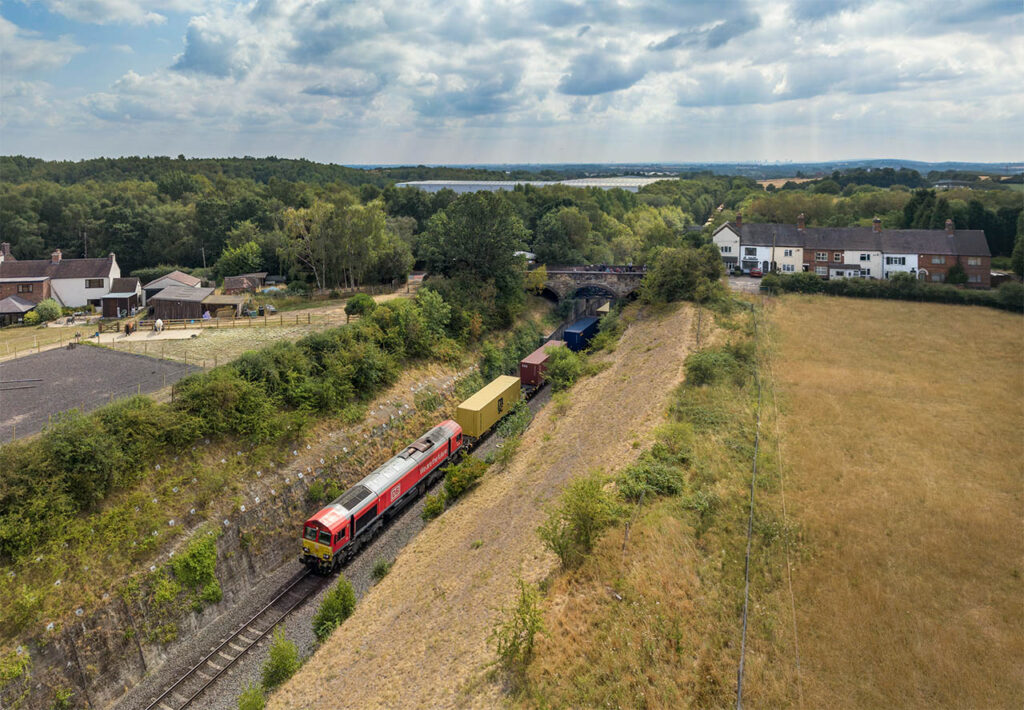
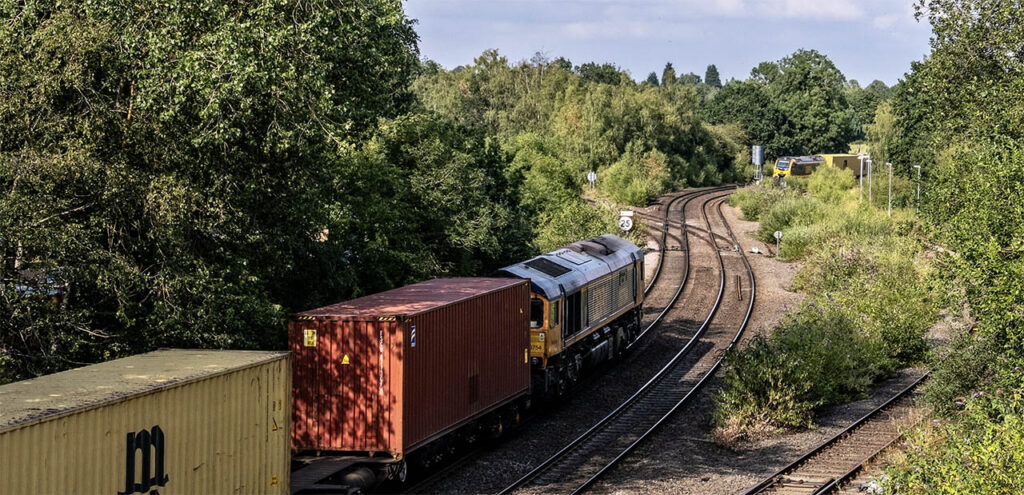
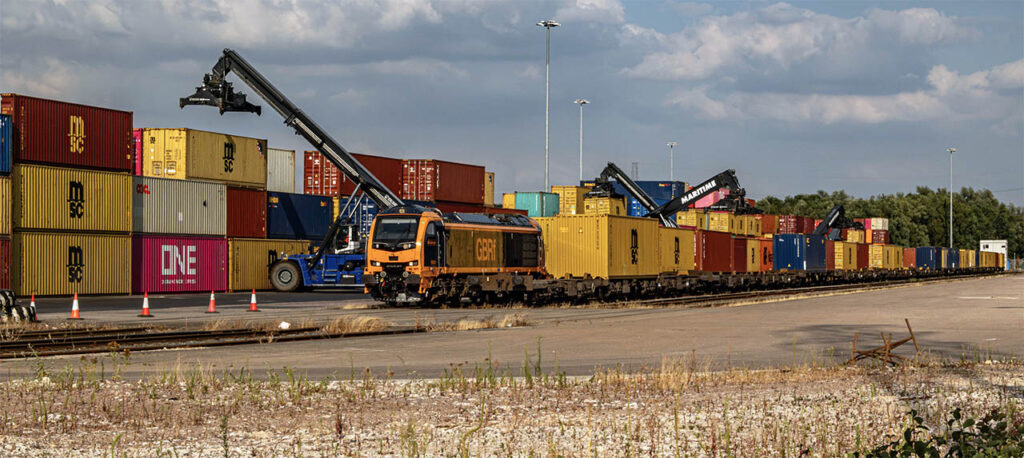
There is something rather satisfying about a two-day railway photography trip that combines meticulous planning, good company, plenty of freight and just enough unexpected incidents to become the stories everyone remembers afterwards. The West Midlands delivered all of those ingredients, with an itinerary put together by local knowledge experts Terry and Rob that showcased just how rich the area is for railway photography.
Day One
Wednesday began with an early start for those travelling from further afield. Mark took an early morning departure from Euston and was met by Rob at Tamworth station before heading over to Water Orton. Nigel enjoyed an uneventful run down the M6 from Cheshire, while Andrew and Duncan had made the longer journey from Yorkshire. School holidays appeared to have taken some pressure off the roads and everyone arrived at the agreed meeting point at Water Orton station more or less on schedule.
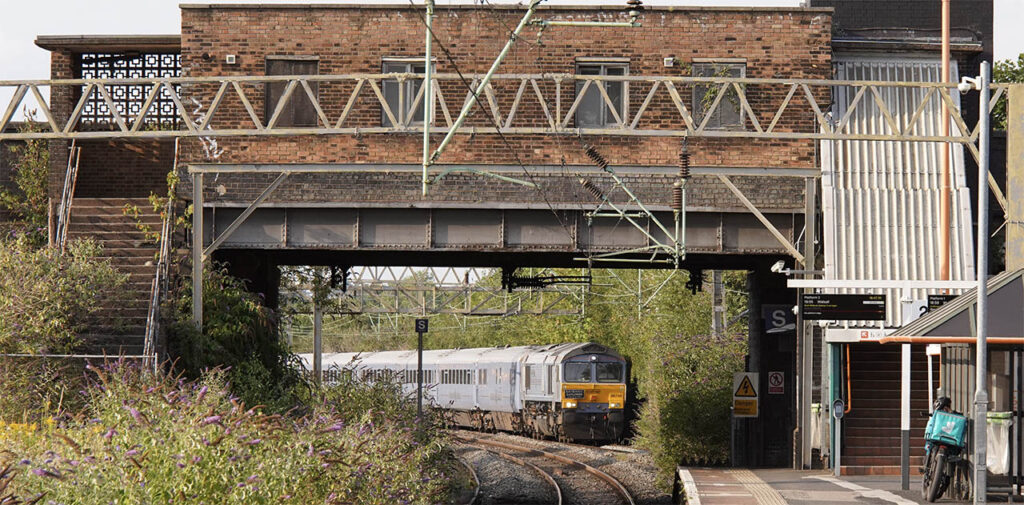
The first location was the station itself. Some of the group later headed for the footbridge just east of the station while others remained on the platforms, taking advantage of the steady flow of passenger traffic and the promise of early morning freight.
Nigel Capelle
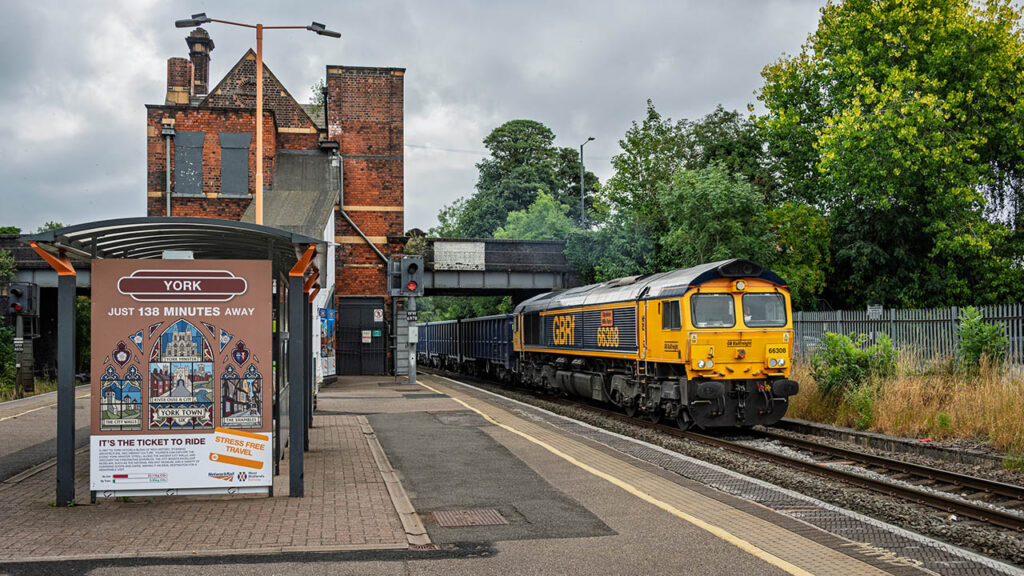
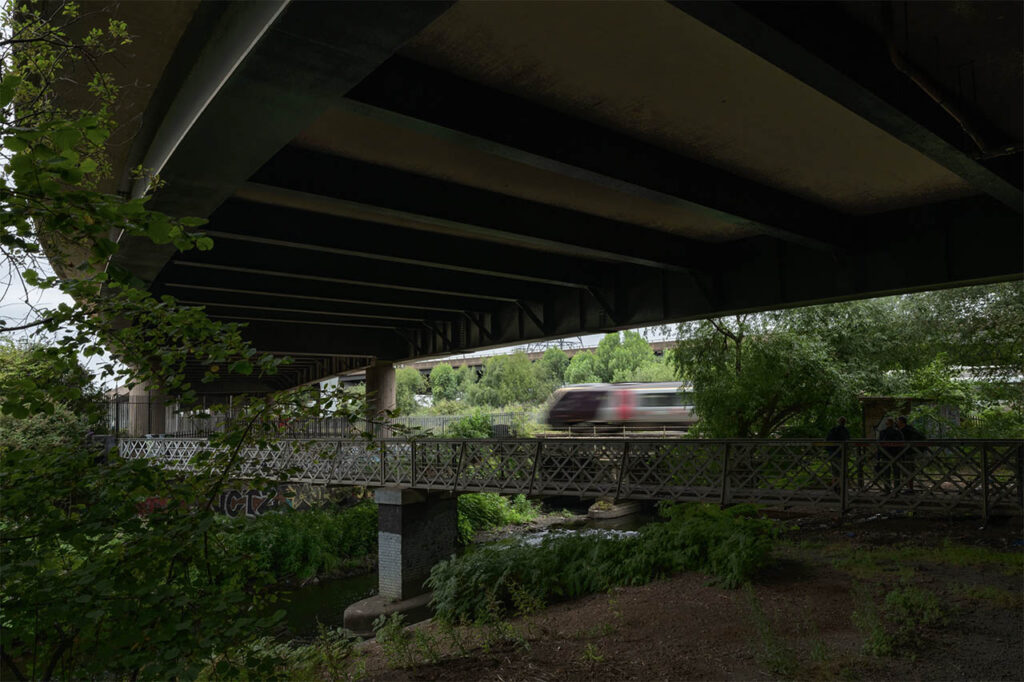
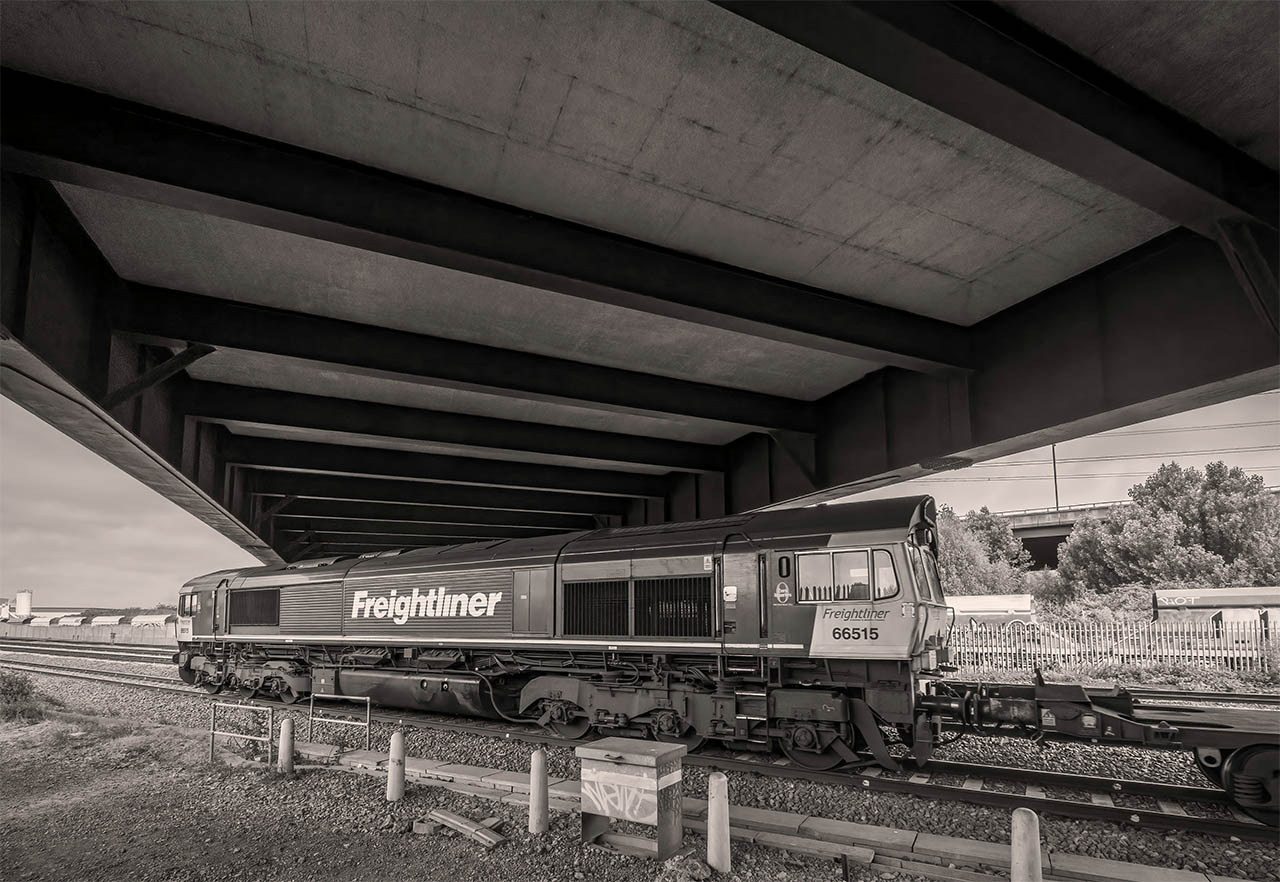
The convoy then moved into Birmingham, stopping at Bromford Bridge, where the railway threads its way beneath the vast road complex of the A47 and M6. It is an uncompromisingly urban landscape of concrete, steel and traffic, but one that offers some wonderfully gritty photographic opportunities.
While a Class 66 waited to depart with an aggregate train from the nearby sidings, there was time to explore the area. A footpath known locally as the Monkey Run led beneath the dual carriageway to a delightful bridge spanning the River Tame before emerging alongside the railway behind palisade fencing. Rob reflected on how remarkable it was to see the river running clear and supporting wildlife, a far cry from the heavily polluted watercourse he remembered from sixty years earlier when Birmingham’s heavy industry dominated the landscape.
Duncan McEvoy
Intermodal trains, CrossCountry Class 170s, Voyagers and assorted freight kept everyone occupied, although finding strong photographic compositions among the clutter of bridges, fencing and infrastructure required more effort than expected. Nevertheless, the location rewarded patience and gave the group a flavour of Birmingham’s industrial railway landscape.
The next objective lay further north east at Atherstone on the West Coast Main Line, where a concentrated burst of freight traffic was expected around lunchtime. By now Tom, Peter and Steve had joined the expedition, swelling the ranks.
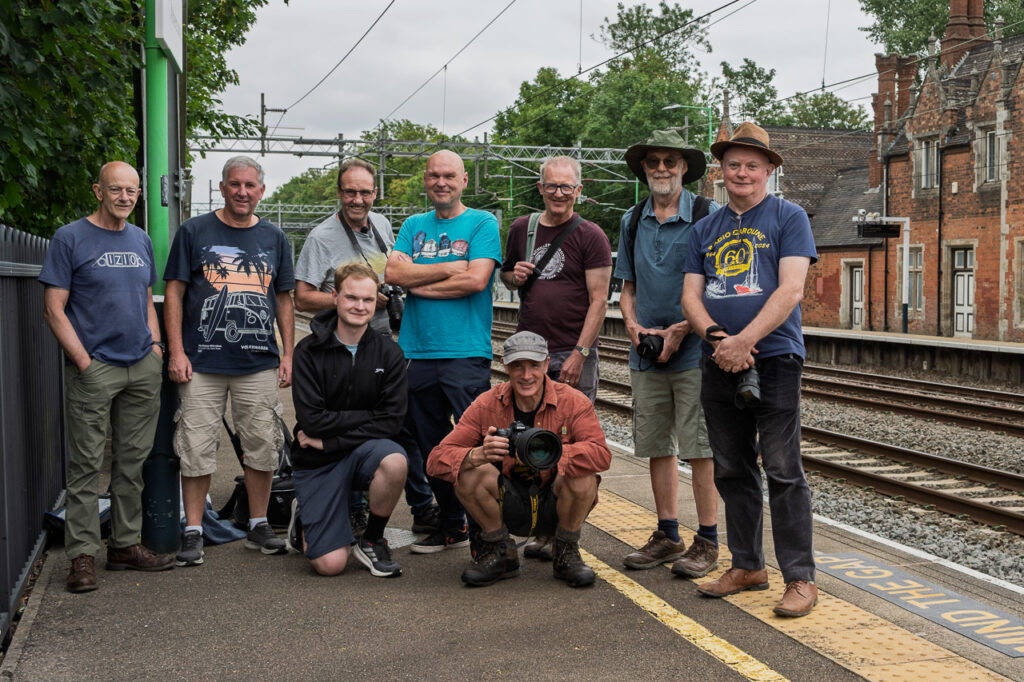
Back L to R: Nigel Capelle, Mark Lawrence, Andrew Shenton, Terry Callaghan, Tom Harper, Peter Leigh & Steve Knight. Front: Rob Callaghan & Duncan McEvoy.
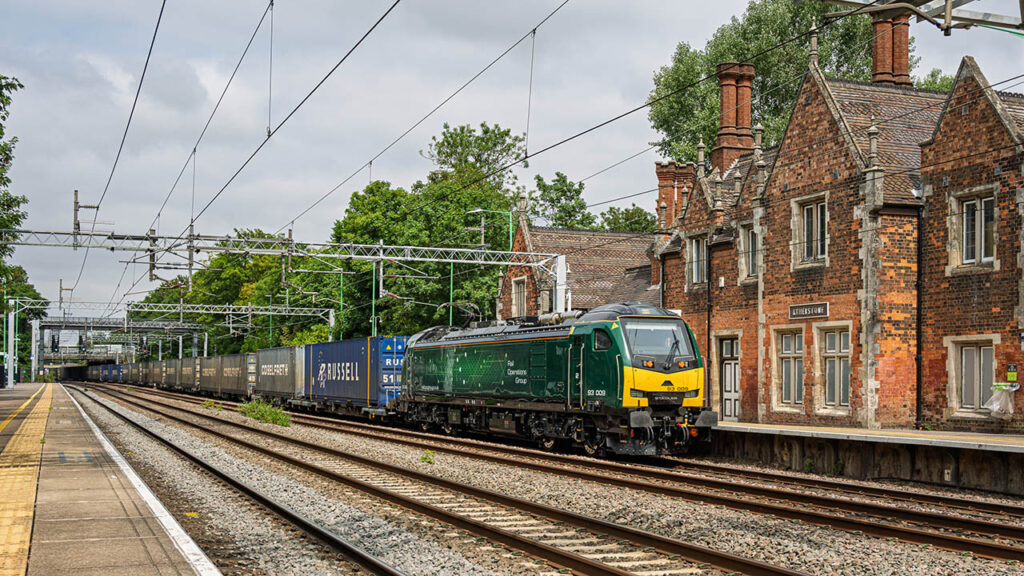
The principal target was Rail Operations Group’s new Class 93 No. 93009, working the Coatbridge to Daventry intermodal service as part of evaluation trials. Right on cue, the locomotive appeared and was soon followed by an Elizabeth Line unit mileage accumulation run between Crewe and Wembley. Pendolinos and LNWR Desiros maintained the pace, ensuring there was barely time to lower a camera between trains.
Nigel Capelle
With both photographic and human requirements demanding attention, the nearby Tesco became the venue for lunch and a welcome comfort break before the convoy continued to the Birch Coppice branch.
Here fortunes were mixed. The outbound freight had departed significantly earlier than timetabled, prompting understandable frustration from the assembled photographers, but disappointment proved short-lived as an incoming freight soon trundled steadily up the single-line branch, partially compensating for the missed opportunity.
Rob Higgins
Late afternoon found the group at Whitacre Junction, where another sequence of freight workings was due. The highlight was undoubtedly the appearance of one of the brand-new Class 99 locomotives. Known affectionately within enthusiast circles as a “Flake”, No. 99001 arrived on a working for Hams Hall, pausing to await clearance into the terminal while another freight occupied the branch.
Peter Leigh
Once the train was inside the terminal, curiosity got the better of everyone. Spotting a gap in the perimeter fencing, the group photographed the locomotive uncoupling from its train in glorious evening sunshine, proving to be an inspired decision.
Rob Callaghan
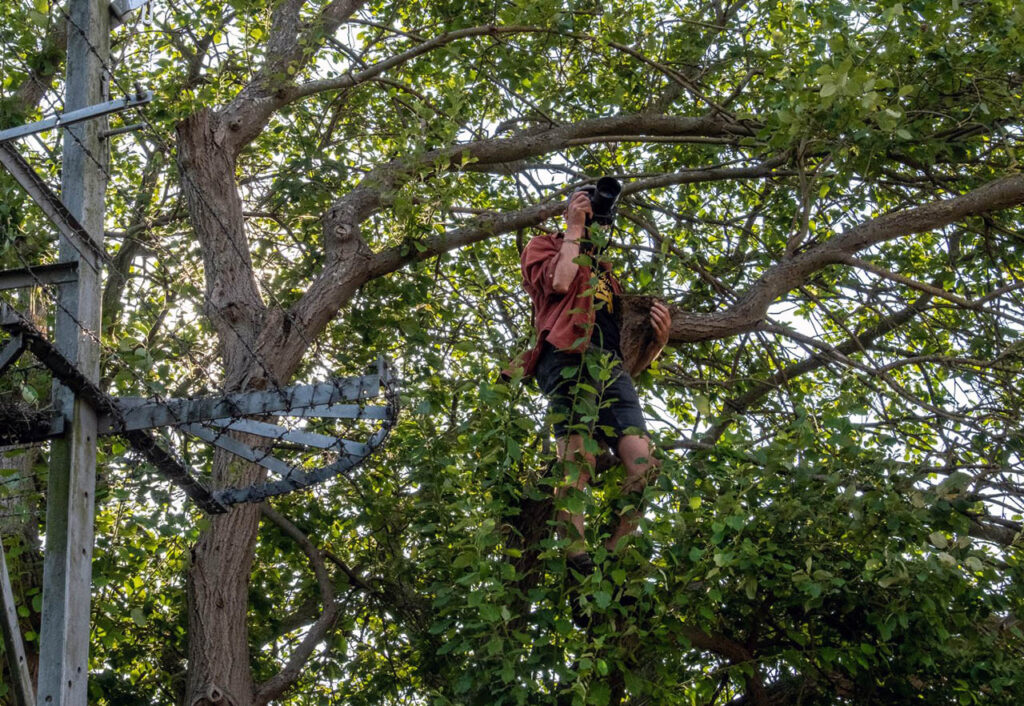
Duncan, meanwhile, remained true to form by scaling the nearest available tree in search of a higher view, providing both an excellent vantage point and considerable amusement for those watching below, with Peter making sure the feat itself was suitably documented.
Peter Leigh
The final photographic objective of the day was at Duddeston, site of Birmingham’s first railway station. Here the elegant pale-blue Britannic Explorer luxury train was expected during the evening. Commuter services provided plenty of warm-up opportunities before the beautifully presented special train swept through in excellent light, giving many their first encounter with its distinctive livery.
Steve Knight
With memory cards comfortably fuller than they had been that morning, the group retired to their hotel in Sutton Coldfield. Dinner, conversation and a couple of well-earned pints rounded off an enjoyable first day.
Day Two
Thursday dawned warm, bright and dry.
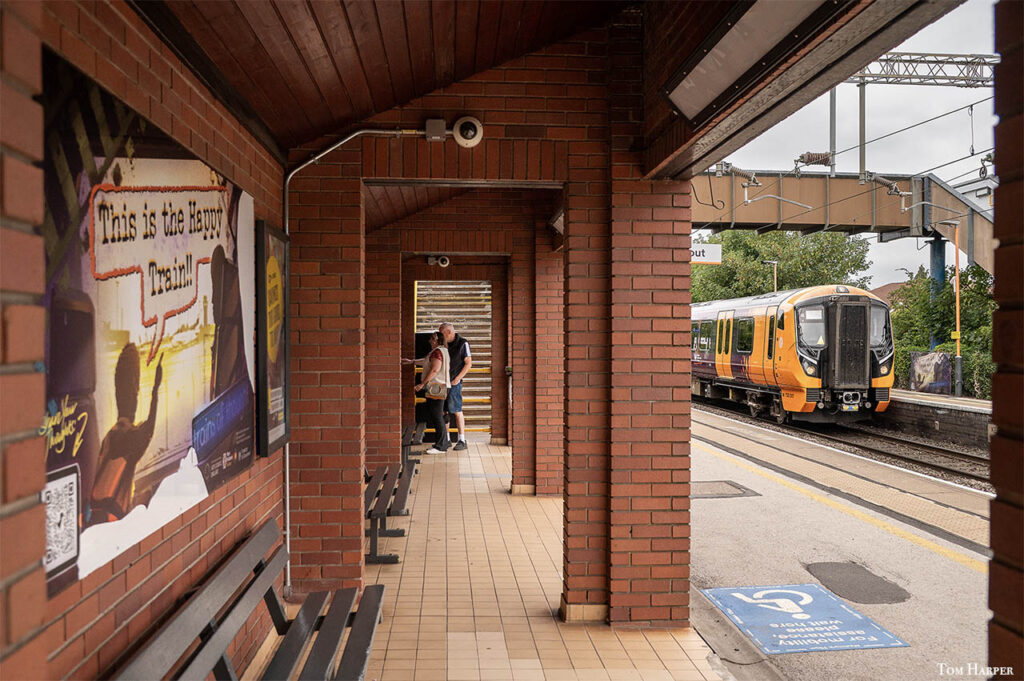
The first call was Four Oaks, where commuters provided almost as much photographic interest as the trains. The target here was the Northern Belle, heading through on its way towards the Sandringham Flower Show. The elegant Pullman train duly appeared amid the busy Cross City Line services, providing an excellent start to the day.
Afterwards the party briefly divided. One group returned to Bromford Bridge while another headed directly for Small Heath, before everyone reunited later in the morning.
Back at Bromford Bridge there was time to spend longer exploring the location than had been possible the previous day. More freight traffic appeared beneath the towering motorway structures, allowing photographers to make full use of the decaying urban surroundings in classic 1Z10 style.
Rob Walton
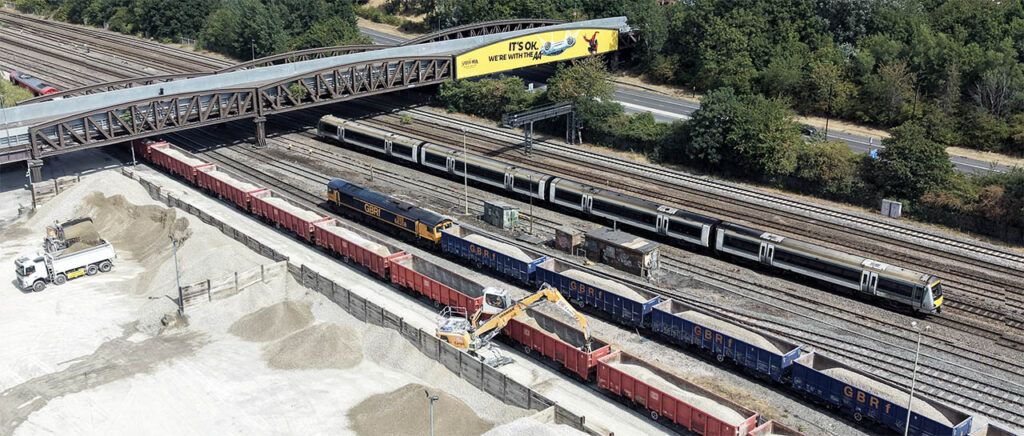
From there attention switched to Small Heath, where an impressive girder bridge spans the former Great Western main line and overlooks the bustling Caledonia aggregate complex. Freight activity was almost continuous as DB and GBRf Class 66s arrived and departed with stone trains, much of the traffic associated with the enormous engineering works taking place around Birmingham.
Steve Knight
Unfortunately, the bridge possessed one significant drawback. Since Rob’s previous visit, very high steel parapets had been installed, presumably for safety reasons. They completely obscured the railway from normal eye level, making step ladders an essential piece of photographic equipment. The sight of a line of photographers perched precariously on folding steps inevitably attracted a fair amount of curiosity from passing locals.
For Nigel, however, there was an additional challenge. His bargain Aldi step stool simply wasn’t tall enough. After several increasingly unsuccessful attempts to peer over the parapet, frustration finally got the better of him. Accepting defeat, he drove off to the nearest DIY store and purchased a proper set of steps, only to discover on returning that everyone else had decided to move on. The new acquisition would have to await its photographic debut on another outing, but it helped inspire the trips eventual title: The Parapet Challenge.
Beyond the railway, Rob also spotted an attractive view along the Grand Union Canal towards the Camp Hill line with Birmingham’s skyline beyond—a location quietly filed away for future exploration.
Terry Callaghan
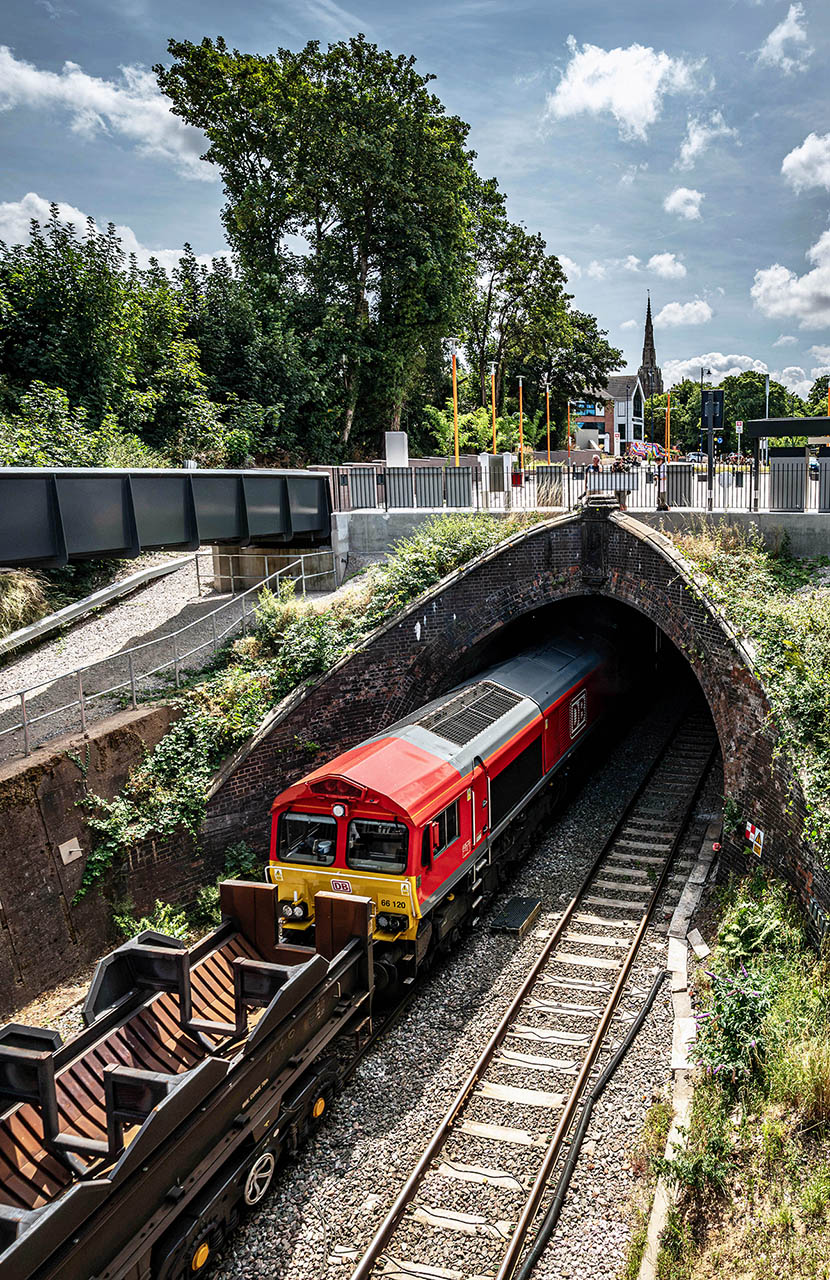
The next destination was Moseley Village, where one of Birmingham’s newest stations provided a complete contrast to the industrial locations visited earlier. The restored station architecture and nearby tunnel entrance promised much, although in photographic terms it perhaps failed to deliver quite as hoped.
By now lunchtime had arrived, allowing everyone to pause for refreshments while waiting for the Tesco intermodal service to Daventry and the returning empty Corby steel train.
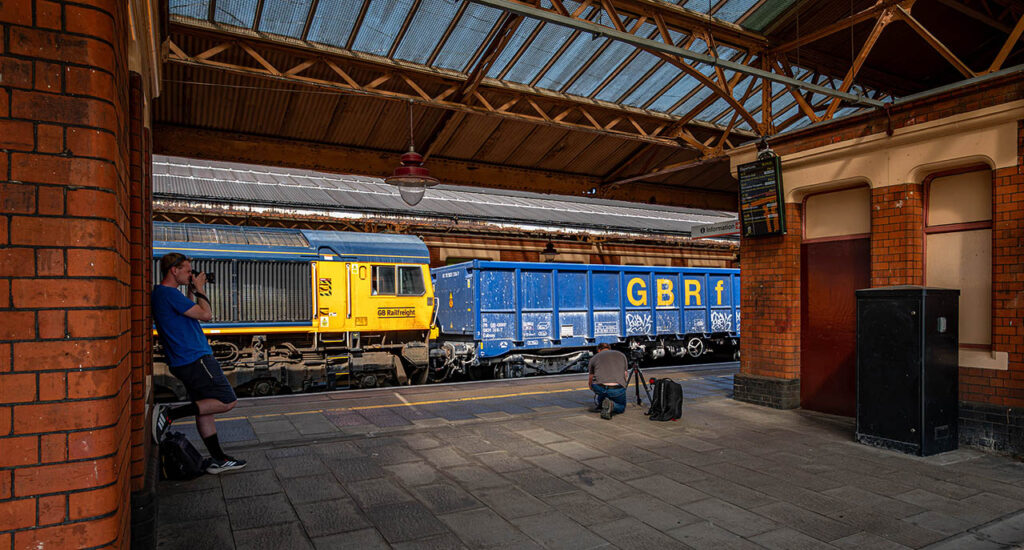
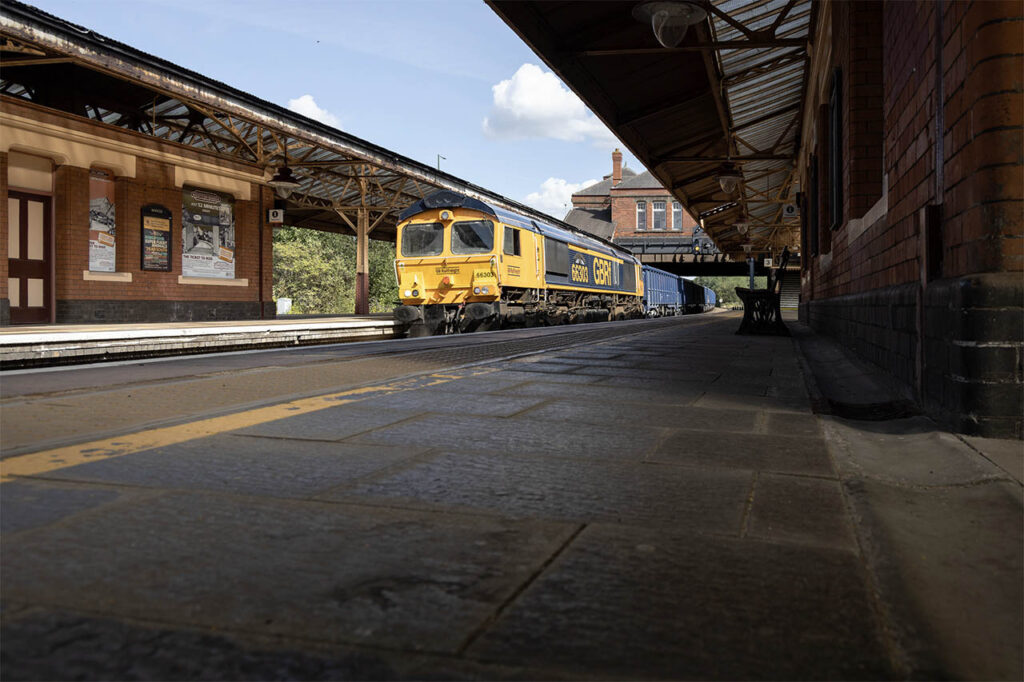
The final railway location of the trip was Tyseley, whose beautifully preserved Great Western architecture offered an altogether different atmosphere. Getting there involved negotiating Birmingham’s busy afternoon traffic and finding somewhere to park proved almost as challenging as photographing over the parapets earlier in the day.
Once assembled on the platforms, the pace relaxed. Local West Midlands Railway and Chiltern services came and went, interspersed with freight workings and a unit making use of the carriage wash.
Terry Callaghan
The station’s handsome Victorian buildings provided attractive backdrops and after two busy days many members simply enjoyed photographing whatever passed through rather than chasing specific targets.
Andrew Shenton
Gradually thoughts turned towards home. Mark departed by train via Solihull to connect with services back towards London, while the remainder drifted away over the course of the late afternoon. Andrew lingered behind a little longer to capture extra video footage for a future YouTube production.
Nigel’s own sat-nav then added one final twist to the adventure. Rather than directing him north up the M6, it unexpectedly diverted him via Rugeley, Uttoxeter and Stoke-on-Trent, suggesting significant congestion lay ahead on the motorway. Although the alternative route added around fifteen minutes to the original journey time, it proved preferable to sitting stationary in motorway traffic.
Looking Back
The West Midlands once again demonstrated just how diverse its railway photography can be. From busy freight terminals and classic West Coast main line action to restored stations, urban industrial landscapes and heritage architecture, the area offered an impressive variety of subjects over the course of two packed days.
As Terry reflected afterwards, the group had barely scratched the surface of what his local patch has to offer. Judging by the enthusiasm, laughter and healthy collection of photographs everyone returned home with, another visit already seemed inevitable.
One lesson, however, had been learned beyond any doubt. If you’re planning a railway photography trip to Birmingham… don’t forget your step ladders.