
Derby Day – Freight, Flakes and a Few False Starts
Friday 18 September 2026
There is something rather appealing about a railway photography outing with no fixed itinerary, a day ranger ticket and a companion who knows how to find freight trains. Add four photographers, a promising selection of railway workings and the unpredictability of the British railway network and you have the recipe for a very enjoyable day out. What could possibly go wrong?
Our rendezvous was Derby station at around 9:30, with CJ already in the area, Gavin arriving from Sheffield, Rob making his way up and Nigel travelling from Kidsgrove. A promising start, with everyone arriving more or less on time and the railway behaving itself. For now.
Nigel had chosen Kidsgrove as his starting point for the simple reason that it fell within the boundaries of the East Midlands Day Ranger ticket and offered the additional attraction of a nearby Tesco with free parking. Railway photography may be an art, but there is no harm in combining it with a little sound financial planning.
Derby – the waiting game
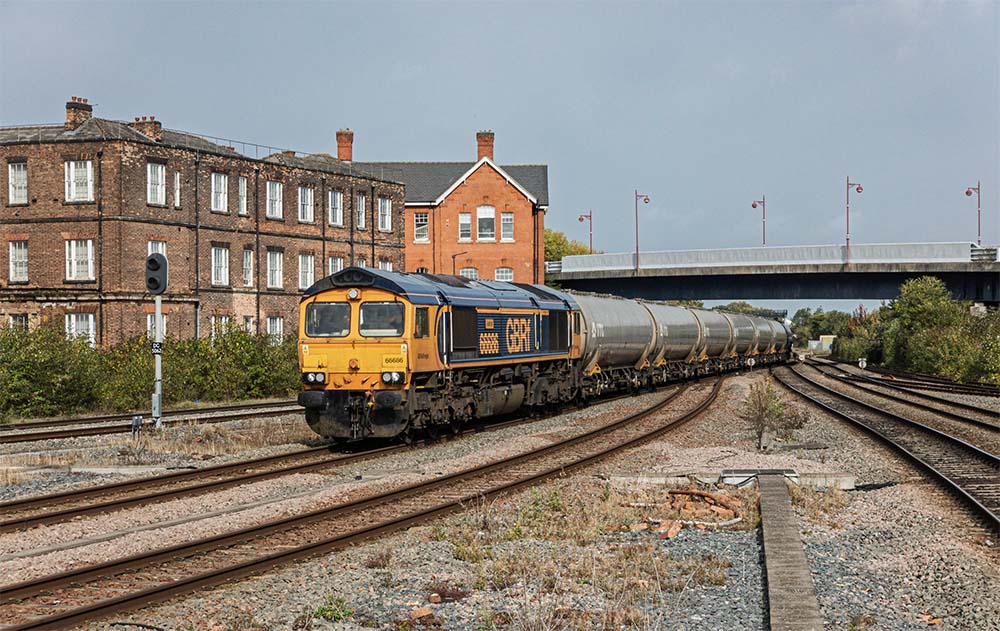
Our first target was the 6M72 Grain Oil Terminal to Sinfin Sidings working, a GBRf-hauled train of tankers. It was expected through Derby at around 10:10, but apparently the railway had other ideas. Instead, we spent longer than planned at the station before the train finally appeared at 10:53.
Fortunately, the delay had its compensations. The working was due to head into Chaddesden Sidings, reverse and return through Derby, giving us a second opportunity to photograph it. Two bites of the cherry are always welcome, particularly when the first has arrived rather later than advertised.
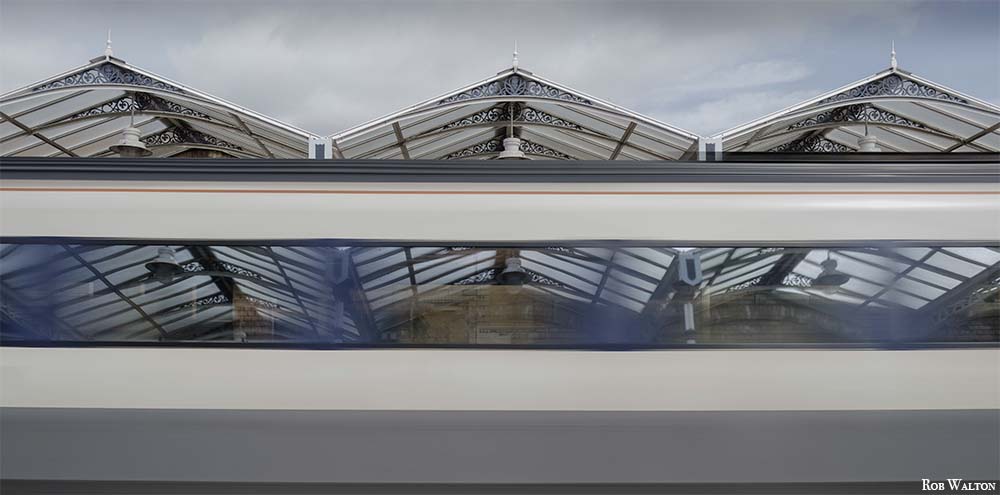
With the first photographic objective achieved, we boarded a train for Nottingham. This was partly to visit one of the country’s more attractive railway stations, with much of its original architecture intact and partly to extract maximum mileage from our day ranger tickets. On these outings, travelling is very much part of the fun.
The route out of Derby passed the Network Rail ‘Rail Technical Centre’, where a number of Class 37 locomotives in various liveries were spotted. Sadly, there was no opportunity to photograph them. Further along, just beyond Beeston, we passed a substantial rail yard containing wagons used to transport new track and points to engineering projects across the network. Among the interesting traction spotted there was GBRf Class 69 No. 69007, coupled to a train of point-carrying wagons.
A quick check of Real Time Trains revealed that this working was due to leave for Toton at 14:29. We made a mental note of it, although exactly where we would photograph it remained a question for later.
Unfortunately, our delayed departure from Derby meant there was little time to enjoy Nottingham station properly. A quick dash for the next stopping service saw us heading south towards Loughborough, where the photographic prospects looked considerably more promising.
Loughborough – home of the Brush
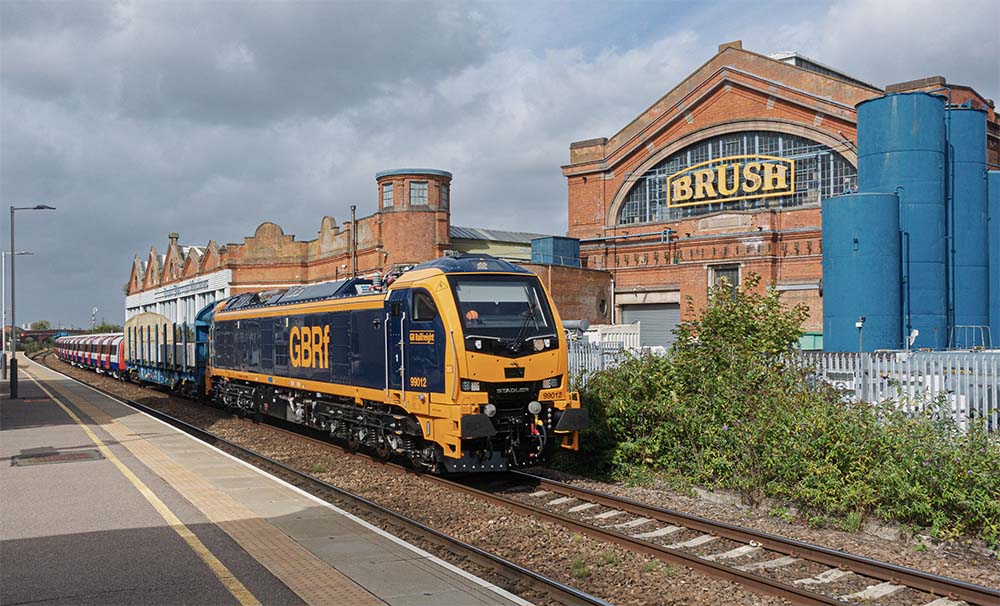
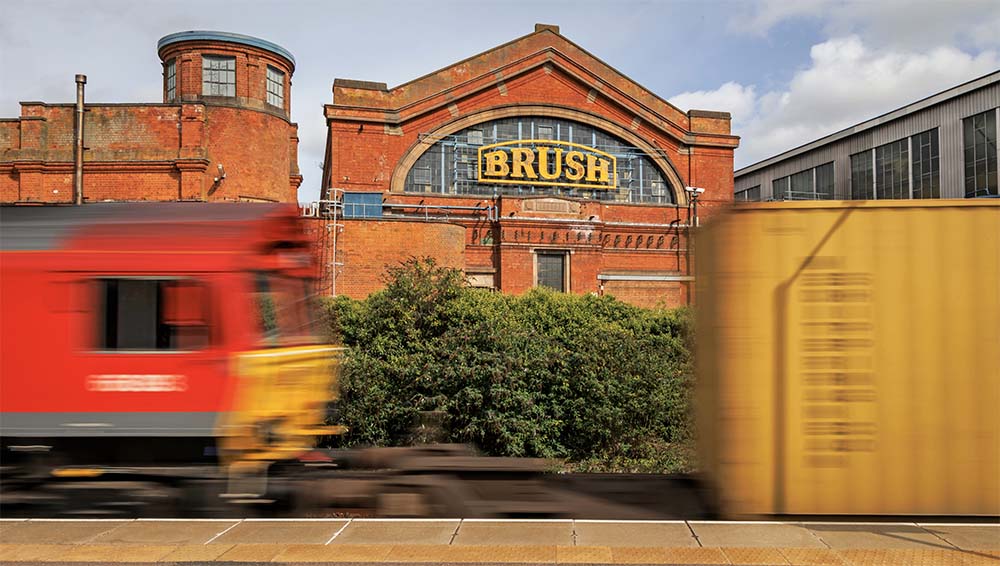
Loughborough has a special place in British railway history, thanks to the Brush Electrical factory alongside platform 3. For decades, it was the birthplace of numerous locomotives and the works remain an impressive reminder of the country’s railway manufacturing heritage.
We had chosen our location carefully. A pair of brand-new GBRf Class 99 locomotives, affectionately known among railway enthusiasts as Flakes, were due to pass through, top-and-tailing a rake of new Transport for London Piccadilly line trains on their journey from Goole to the Old Dalby test track.
The working, 6X22 from Goole to Old Dalby, featured No. 99014 at the front and No. 99007 at the rear. We duly positioned ourselves to make the most of the passing train, trying to incorporate the large Brush logo on the factory building into our compositions. It seemed only right to acknowledge the heritage of the location while photographing some of its newest railway products.
But the Class 99s weren’t the only attraction.
Another movement, spotted on Real Time Trains, was the 0D27 light-engine working from Leicester L.I.P. to Chaddesden Sidings. We had no idea what locomotive would appear, so everyone prepared for the shot from different positions around the station.
When the loco finally arrived, there was a collective surprise. Rather than one of the more modern locomotives we might have expected, the working was GBRf Class 47 No. 47739, a Brush Type 4 thundering through the station at speed.
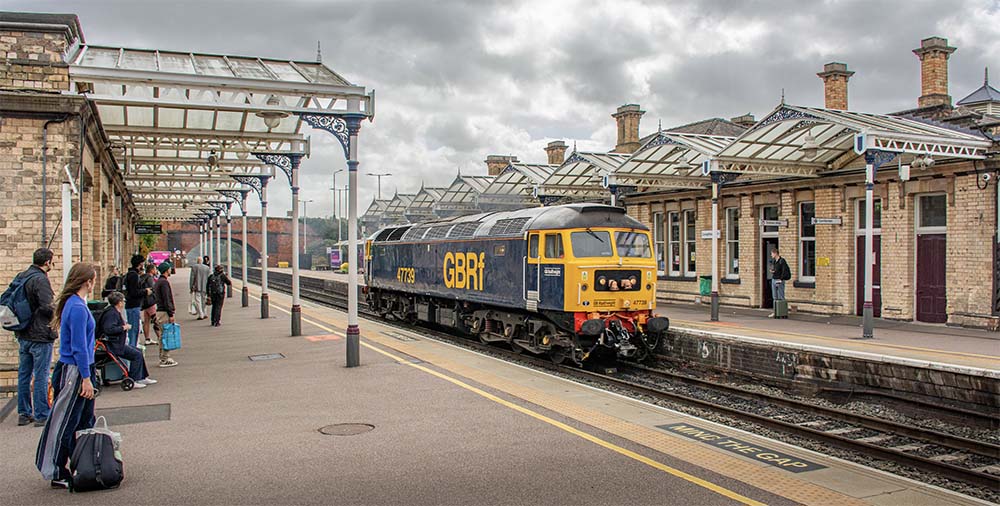
A Brush-built locomotive passing the Brush works was an appealing photographic coincidence. There was just one small wrinkle: after a little research, we discovered that this particular locomotive had actually been built at Crewe. Never mind; it was still a pleasing juxtaposition, even if the historical connection wasn’t quite as neat as we had hoped.
With the principal targets successfully photographed, we took a welcome break for refreshments before retracing our steps towards Nottingham.
Beeston and Attenborough – a tale of two platforms
Our next objective was the Class 69 working we had spotted earlier. With its departure from the yard approaching, we needed to decide where to photograph it. Beeston and nearby Attenborough were the two obvious contenders.
Nigel and Rob opted for Beeston, positioning themselves on platform 1, while Gavin and CJ initially took up positions on platform 2. Then, in a sudden change of plan, Gavin and CJ jumped aboard a southbound train and headed one stop south to Attenborough, where the railway opens out to provide clearer views of passing trains.
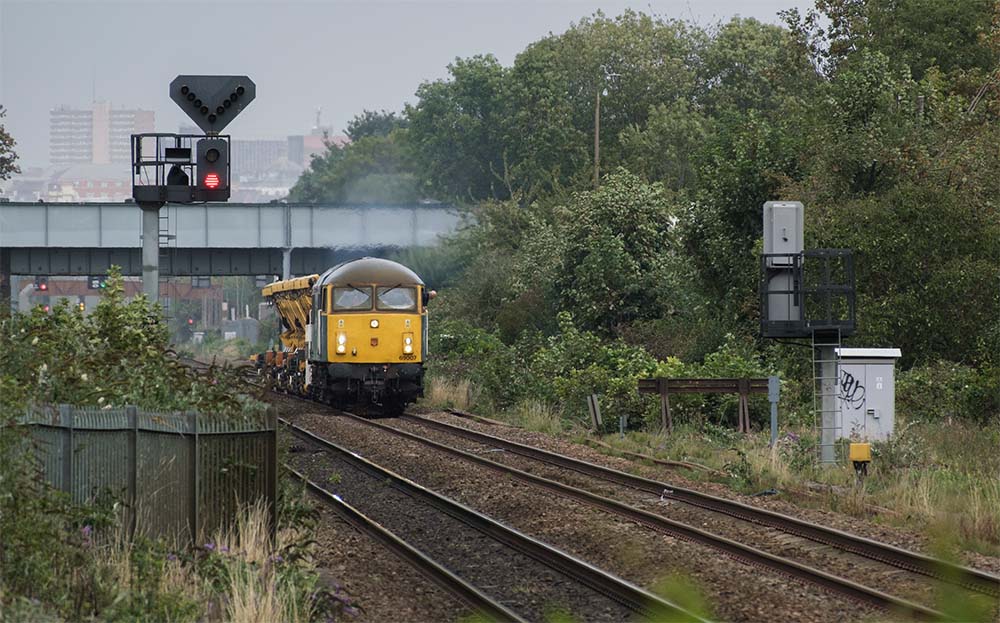
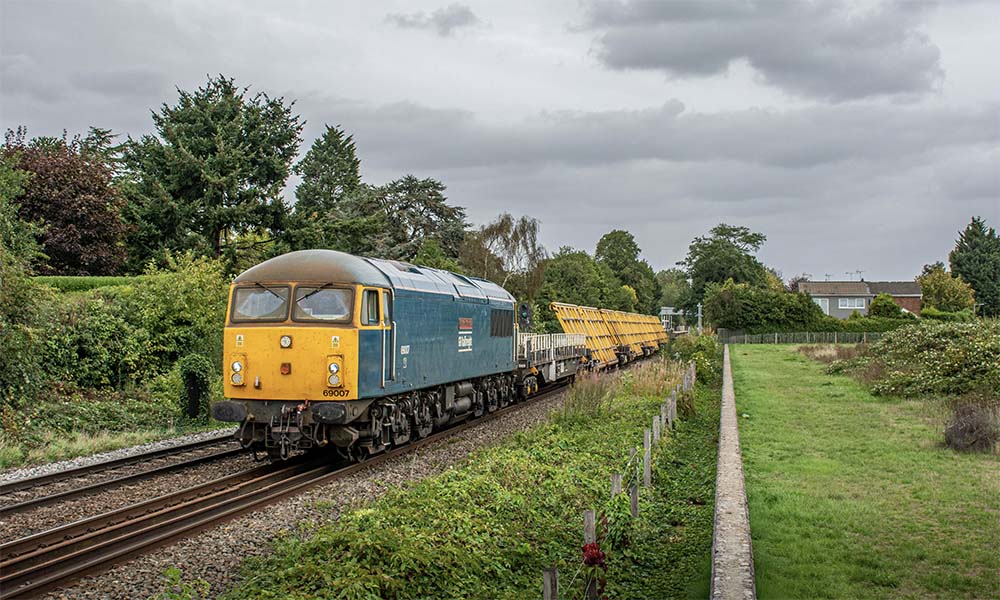
This left the group temporarily divided, but there was no great drama. Everyone had identified a suitable vantage point and the working was successfully photographed at both locations as Class 69 No. 69007 passed through with its train of engineering wagons.
Which location produced the better photograph? We’ll leave that one to the readers. There are limits to how much disagreement a perfectly civilised railway outing should generate.
After a brief telephone discussion, we were reunited and began considering our next move. Grantham, Peterborough and Lincoln were all floated as possibilities, but the afternoon was advancing, the weather was deteriorating and railway reliability was beginning to look decidedly less reassuring.
It was Friday afternoon, after all. Cancellations and delays were already creeping into the equation and the prospect of becoming stranded miles from our intended route home was losing its appeal. Leicester emerged as the sensible choice.
Leicester – heritage traction and changing plans
Leicester offered a familiar mixture of main-line action and railway heritage. The L.I.P., just before the station, provided its usual assortment of older locomotives and other heritage traction, much of it looking as though it could do with a little tender loving care.
We managed a few photographs around the station, including a passing intermodal freight, while keeping an eye on the clock and the train service. The prospect of heading across to Nuneaton was attractive, as several freight movements were due along the West Coast Main Line.
However, this was where the day’s carefully improvised plans began to unravel.
Our intended 15:50 CrossCountry service towards Birmingham New Street was delayed, eventually leaving Leicester at 16:13 and running directly to Birmingham without its scheduled intermediate stops. That rather put paid to our plan to alight at Nuneaton for the expected freight action.
A later service offered another possibility, but with the timings no longer working in our favour, we decided to make the best of the situation. Rather than persist with a plan that was rapidly becoming less practical, we got off at Narborough to photograph a Colas Rail engineering train.
The 6M40 working from Westbury Down T.C. to Cliffe Hill Stud Farm was hauled by Class 70 No. 70803. Here, the old signal box and station foot bridge provided an excellent backdrop, framing the locomotive and its train rather nicely.
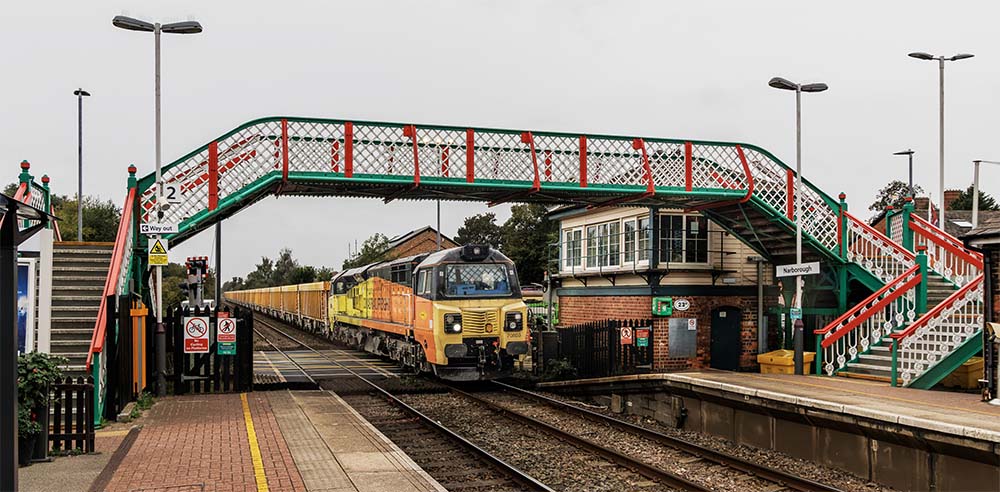
It was a good example of why these outings can be so rewarding. Even when the original plan goes awry, an unexpected location or a different composition can produce one of the day’s most satisfying photographs.
The pub – an essential part of the itinerary
By now, however, the railway was testing our patience. Another cancellation left us facing around an hour without a worthwhile photographic opportunity, while the weather continued to close in.
There was only one sensible course of action: retire to the nearest pub.
Over refreshments, we discussed our options and reconsidered the remaining journey home. Rob decided that discretion was the better part of valour and caught the next available train towards Nuneaton, where he could connect with a service along the West Coast Main Line towards Tamworth and home.
Nigel, Gavin and CJ stayed a little longer before heading back to Leicester. From there, an East Midlands Railway Meridian unit carried them to Derby, where the group finally split up. Nigel caught the next train to Crewe, alighting at Kidsgrove, while Gavin and CJ lingered long enough to photograph a southbound freight before setting off for their respective homes.
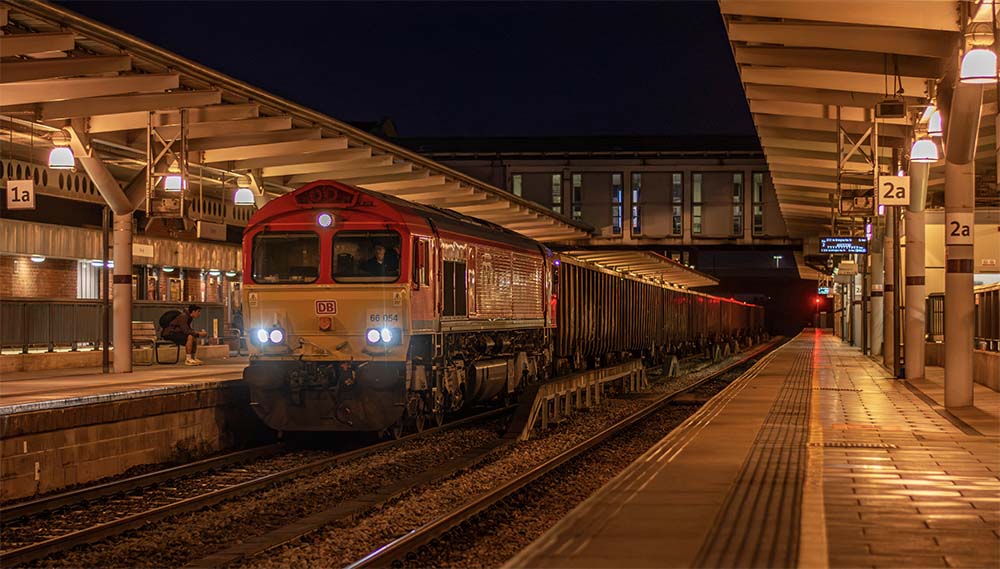
The day’s ambitions had been somewhat curtailed by the vagaries of the timetable, but we had managed to photograph the principal targets and enjoy a varied selection of locations along the Midland Main Line.
Another day well spent
Derby Day was a reminder that successful railway photography outings depend on more than simply identifying interesting trains. A little planning helps, local knowledge is invaluable and flexibility is essential. Above all, it pays to have companions who are happy to adapt when the railway network decides to rewrite the itinerary.
We photographed oil tankers, brand-new locomotives, London Underground stock, an unexpected Class 47 and a Class 69 engineering train. We visited several interesting stations, enjoyed some railway heritage and even managed a pub stop when the opportunities dried up.
Not every intended move came off and Nuneaton’s freight traffic remained tantalisingly out of reach. But the company was excellent, the photographic opportunities were varied and the day delivered more than enough to make it worthwhile.
And if the railway had been a little more reliable, we might even have had time to enjoy Nottingham station properly.
Fancy joining us on a future outing? These informal days out are all about good company, interesting railway locations and making the most of whatever the network throws our way. There is no rigid itinerary and no guarantee that everything will run to plan, but that’s half the fun. Bring your camera, a sense of adventure and, just occasionally, an appreciation of the local pub.
Rob Walton
Nigel Capelle