
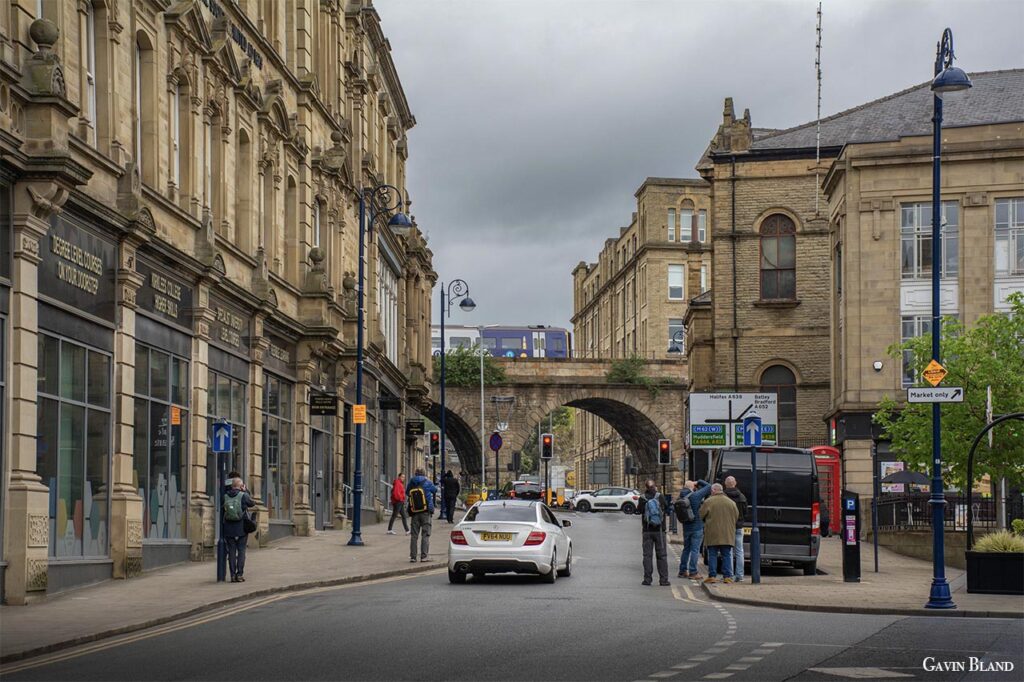
The 1Z10 outing to Dewsbury and Batley was arranged with a clear and shared purpose: to record a stretch of the TransPennine route before the installation of overhead electrification – the “knitting” – permanently alters the character of the line. With local knowledge from Andrew guiding the plan, the group focused on a relatively short section of railway, aiming to extract as much photographic variety as possible from a location that rewards observation rather than distance covered.
Early Starts and Missed Opportunities
For some, the day began well before the main gathering. Nigel and Jim set off around 06:30, heading for an overbridge near Brighouse in the hope of securing “the first shot of the day of a Drax to Liverpool biomass working.” It was a familiar calculation – early start, freight timing and a bit of luck – but on this occasion, they “should have left earlier and so didn’t make it in time.”
What followed set a slightly chaotic tone for Nigel’s morning. Arriving at the location, he found himself “totally disorientated” and managed to confuse east and west. The next working, a Grand Central ECS from Crofton to Bradford Interchange, was expected – according to RTT – to be a Grand Central Class 180. Instead, it appeared as a Voyager. Positioned on the overbridge and waiting, Nigel heard a train approaching – but from the wrong direction. “The Voyager sailed underneath the bridge and all I got was a very disappointing going-away shot.” Jim, better placed, at least came away with something usable.
Elsewhere, Andrew and Gavin had also been tempted out early, visiting Horbury Cutting and the area around Healey Mills Yard. The draw was the same: the remaining biomass flows that still operate in the area. Terry and young Rob joined this effort, successfully capturing freight before the focus shifted to the main event – Dewsbury itself.
Gathering at Crackenedge Lane
By around 08:15, the group had assembled at Crackenedge Lane, just north of Dewsbury town centre. This location quickly proved why it had been chosen. From here, the railway curves into the town, framed by mills and dense Victorian industry – exactly the kind of scene that would soon be interrupted by overhead line equipment.
Tom and Gavin, in need of sustenance, made an early diversion to a nearby café, returning with what Tom described as “enormous bacon and sausage-filled cobs.” With breakfast sorted, attention turned fully to the railway.
The nearby footbridge – reached via “well worn stone steps” – offered what Tom called “the classic view south towards Dewsbury station, with the honeyed stone of the town centre’s buildings for a backdrop.” Trains operated by Northern and TransPennine Express passed regularly, providing a steady flow of subjects.
Rob noted the character of the location in more grounded terms: care was required where you stepped, given the condition of the footpath, but “the upside is the view of the line as it goes into Dewsbury is excellent.” Just beyond, the group could overlook a scrapyard occupying the site of the former Batley Carr station on the old Great Northern Railway route. The tunnel portal – still visible and connecting through to the former Dewsbury Central station – hinted at the area’s layered railway history.
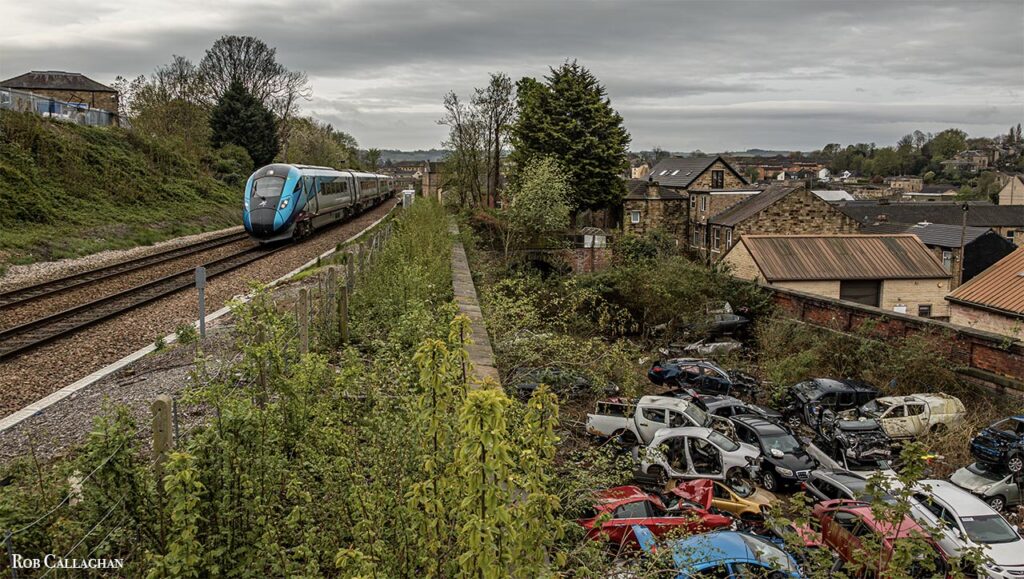
Andrew summed up the appeal of the location: views towards Dewsbury, the old GNR Batley Carr station site, Crackenedge Tunnel and the line stretching towards Batley – all within a compact area. “Plenty of trains passed, with numerous compositions to get the shutters clicking.”
Moving into Dewsbury
After around an hour at Crackenedge, the group began the short walk into Dewsbury town centre. What should have been a brief journey turned into a prolonged exploration. As Andrew observed, it took “about three hours to do a ten-minute walk.”
Encounters with locals became a recurring theme. As Rob noted, the question “what are you photographing?” came up frequently. In one memorable instance, a resident invited the group into his garden to gain a better angle. Rob C accepted, climbing onto a wall in search of a shot, only for the situation to escalate briefly when the man’s wife shouted, “there’s someone in the garden!” The misunderstanding was quickly resolved by the husband and the group carried on. This spot included a circular ventilation shaft for the disused Great Northern Railway tunnel previously mentioned, adding an unusual feature to the compositions.
The route followed the railway closely, revealing a succession of viewpoints framed by industrial buildings. The stone viaduct running through the town became the central feature, offering opportunities from multiple angles.
Tom highlighted how the group spread out through the town centre, seeking “creative shots of trains traversing the viaduct.” The presence of everyday settings – such as a conveniently located Lidl – added a practical dimension, allowing some to restock supplies while others continued photographing.
Lighting conditions worked in their favour. The cloud cover provided even illumination, which Andrew noted was particularly helpful given that the line runs north–south through the town, despite being part of an east–west route.
Dewsbury Station and a Break
Eventually, the group reached Dewsbury railway station. After several hours on foot, a break was needed.
The West Riding Refreshment Room provided the ideal setting. As Tom put it, it offered “convivial surroundings” in which to enjoy coffee and reflect on the morning’s progress.
Here, the plan for the afternoon was confirmed: take the next train to Batley, photograph around the viaduct there and then walk back towards Dewsbury.
Batley: Transition and Constraints
The journey to Batley railway station was brief – “not quite one and a half miles… only three minutes,” as Tom noted – aboard a Northern service formed of British Rail era Class 158 units.
Batley presented a different set of challenges. The station was “undergoing a huge amount of construction and modification,” as Rob observed, part of the wider TransPennine Route Upgrade. This limited photographic options and introduced modern distractions into the frame.
Andrew described the station as “in transition,” though the surrounding area still offered “cobbled streets and grand architecture” reflecting its industrial past. Nigel found attempts to incorporate this architecture into compositions “not really successful,” though some shots with the old mills were achieved.
The group dispersed to explore the area around Batley Viaduct. Tom described the climb up Mill Lane, which provided “excellent views across the viaduct towards Batley station,” while others worked lower down, experimenting with angles.
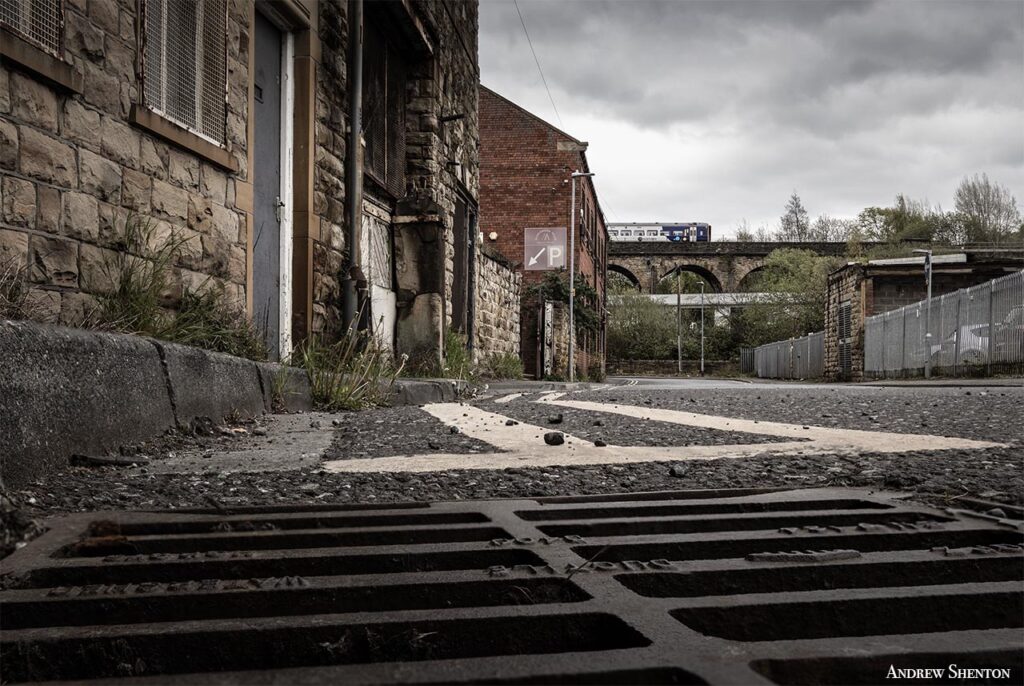
Interaction with locals continued. Rob recalled a man who, after speaking with Gavin, “rushed into his house and brought a framed railway photograph… to show us what the viaducts and railway area looked like back in the 1960s.” This moment provided a direct comparison between past and present – particularly relevant given the ongoing changes.
The Walk Back and the Rain
The plan to walk back towards Dewsbury proved straightforward in principle but more eventful in practice. The group became spread out along the route, each cluster stopping at different points to capture views.
As they neared Crackenedge again, the weather changed rapidly. Tom noted that “the sky was darkening,” and soon after, heavy rain began. Some reached the cars in time, but others were caught out. Nigel was among those “literally soaked to the skin,” while Andrew admitted they had “foolishly held firm” waiting for one more train before retreating.
The solution was practical: relocate to a nearby McDonald’s for “a well earned coffee and an attempt to dry out.” This pause allowed the group to recover and reassess.
Ravensthorpe and the River Calder
With the rain passing, attention shifted west towards Ravensthorpe. Tom was dropped at the station to begin his journey home, while the rest continued to the River Calder crossing.
Here, the focus was on infrastructure that will soon be replaced. The existing bridge, carrying the line over the river, will become redundant once the new Baker Viaduct is completed as part of the upgrade.
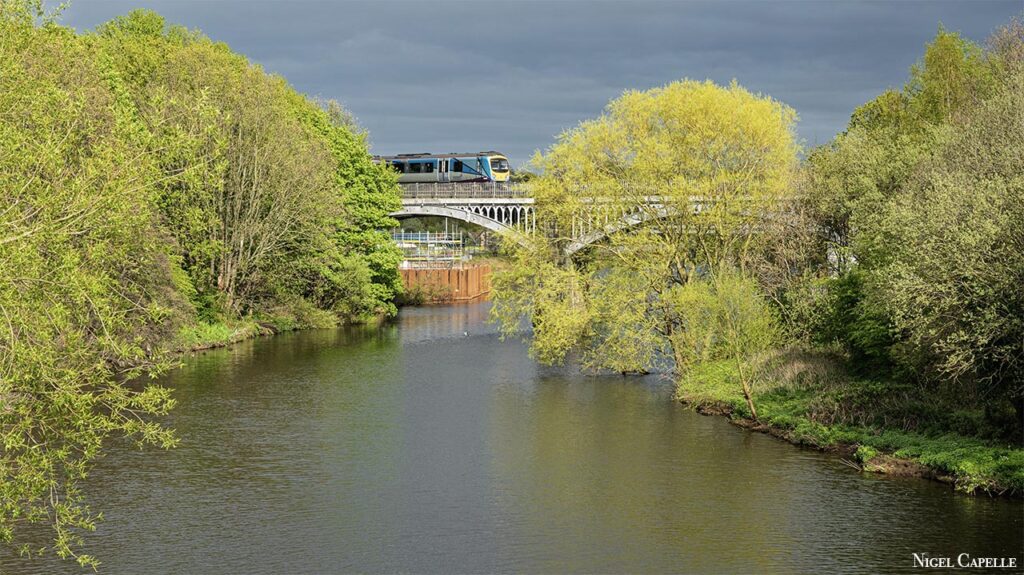
Photographing trains at this location required careful timing, with Rob noting the need to capture trains “between the trees on each side of the river.”
Nearby, the group accessed the Spen Valley Greenway, following the route of a former Lancashire & Yorkshire Railway line. Here they discovered “a remarkable survivor” – a four-aspect colour light signal still standing among the trees. Andrew described it as “more entertaining than it should have been,” but it provided a distinctive subject.
Vegetation posed challenges, but these were addressed with some ad hoc clearance – “lumberjack Gavin came to the rescue,” as Rob put it.
Final Session at Crackenedge
As the afternoon progressed, conditions improved. The cloud began to break and sunlight emerged from the west.
Recognising the opportunity, a smaller group returned to Crackenedge Lane. The change in light transformed the scene. Nigel described “the spectacular setting sun… illuminating the mills of Dewsbury to great effect – possibly the best shots of the day.”
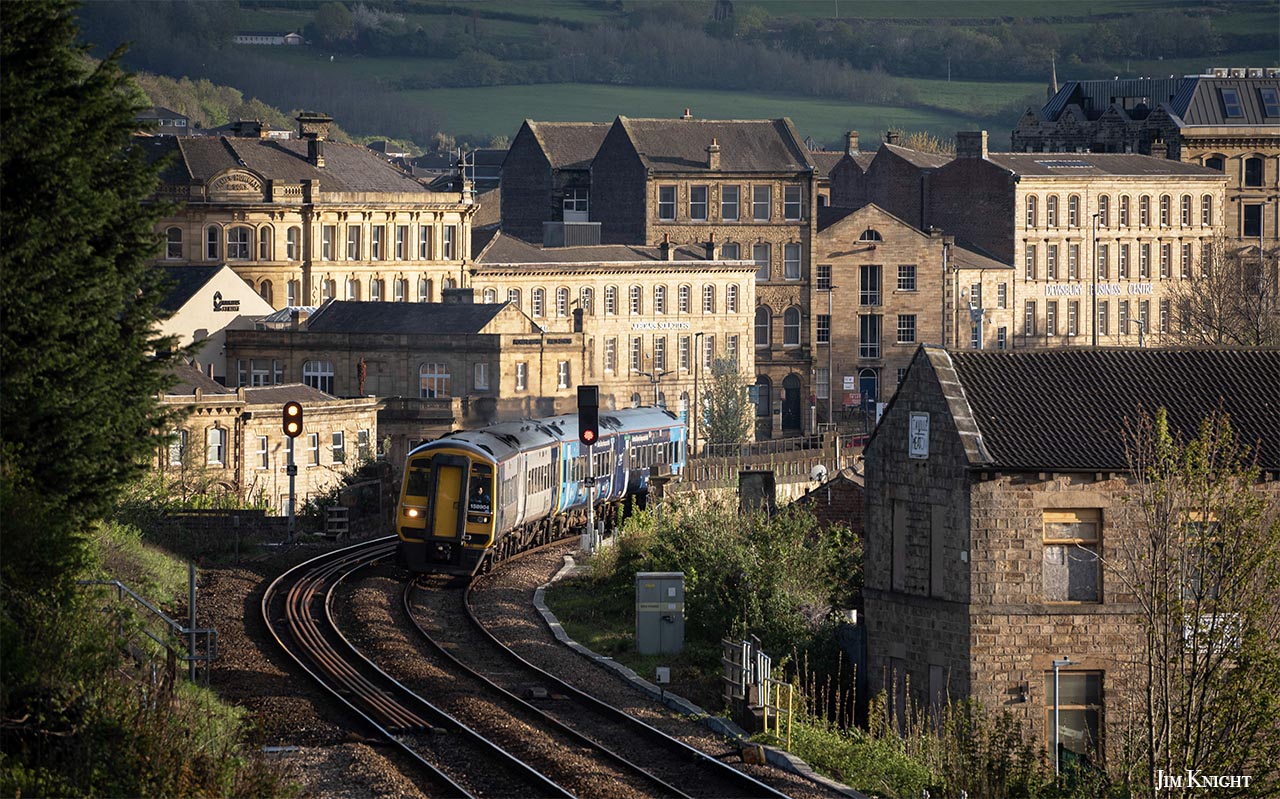
Andrew echoed this, noting that the “classic view of the grand stone buildings” was now presented in conditions that justified the return. Given that these views will soon be altered by electrification, the timing felt appropriate.
Conclusion
The day concluded back where it had effectively begun, at Crackenedge. From there, the group dispersed, heading home after what Nigel described as “a very satisfying day’s photography on a short stretch of line that will be transformed.”
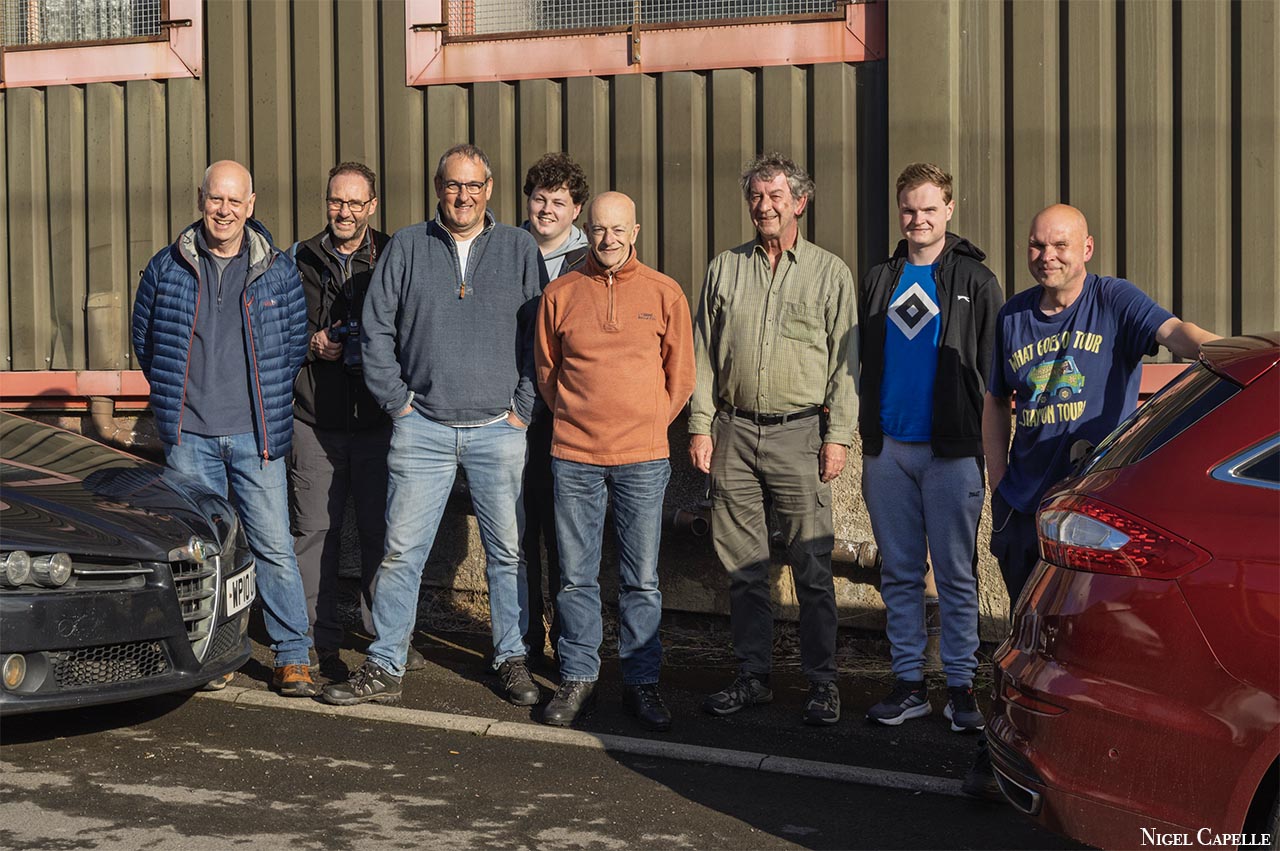
L to R: Rob Walton, Andrew Shenton, Gavin Bland, Joe Murphy, Nigel Capelle, Jim Knight, Rob Callaghan & Terry Callaghan
As Andrew reflected, it had not been a typical 1Z10 trip. There was “no freight train chasing, no miles of driving,” but instead a focus on a single location and the challenge of extracting as much as possible from it. The result was a varied and productive day, shaped as much by interaction, fine vistas and timing as by the trains themselves.
With the TransPennine Route Upgrade progressing, the scenes captured during this outing represent a record of the line in its current form – one that will not be available for much longer.
Tom Harper
Andrew Shenton
Rob Walton
Nigel Capelle