
Steam, Spray & A Canterbury Tale
5 - 7 November 2026
As autumn takes hold across the UK, the spectacular reds, golds and browns of the changing foliage provide some wonderful opportunities for railway photography. Unfortunately, those same falling leaves can create something of a nightmare for the railways, reducing wheel adhesion and making braking increasingly challenging. Network Rail’s answer is to deploy its fleet of Rail Head Treatment Trains (RHTTs), affectionately known as the ‘leaf busters’, to clean the rails and keep the network running safely.
For 1Z10, this annual autumn spectacle provides a rather convenient excuse to organise a photographic expedition and this time the chosen destination was Kent and East Sussex. With a good selection of RHTT workings planned, some interesting freight movements and the prospect of spectacular autumn colour, the ingredients looked promising. There was, however, one rather significant omission from the forecast: decent weather!
A stubborn area of high pressure had settled over the South East, bringing with it persistent gloom, mist and fog. Bright sunshine was to prove something of a rare commodity, although there would be a few welcome appearances from the golden orb in the sky.
The five-man team comprised Nigel, Rob, Mark, Steve and Gavin, with Mark providing invaluable local knowledge and contacts to help navigate the various workings and locations. What followed was three days of railway photography, unexpected diversions, some logistical ingenuity and, as always, plenty of good company.
Thursday - A promising start in the sunshine
For Nigel, Thursday began with a 5am alarm and an early drive south to collect Rob. Their planned 7.30am rendezvous was delayed by around 15 minutes thanks to HS2 civil engineering works near Rob’s home. A small reminder that railway infrastructure projects can interfere with road journeys as well as train services!
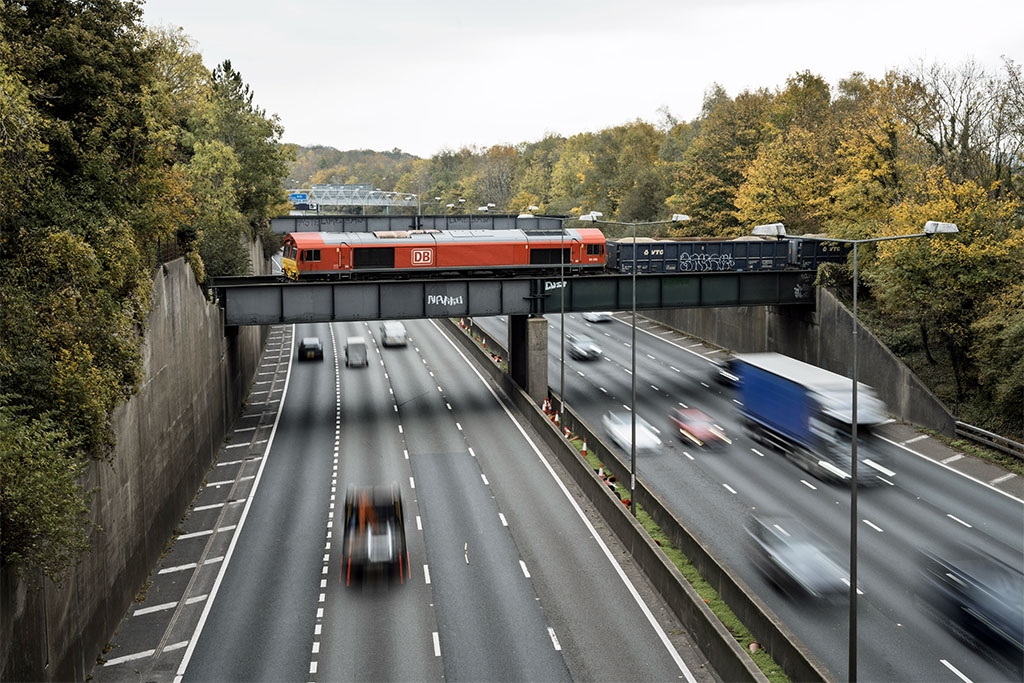
With Rob safely aboard, the pair headed towards West London to collect Mark before negotiating the southern side of the M25 and making their way to Merstham. Their first photographic opportunity was a DB Cargo Class 66 working 6M26 from Newhaven Marine to Langley. The location offered an excellent side-on view as the train crossed one of the railway bridges spanning the M25.
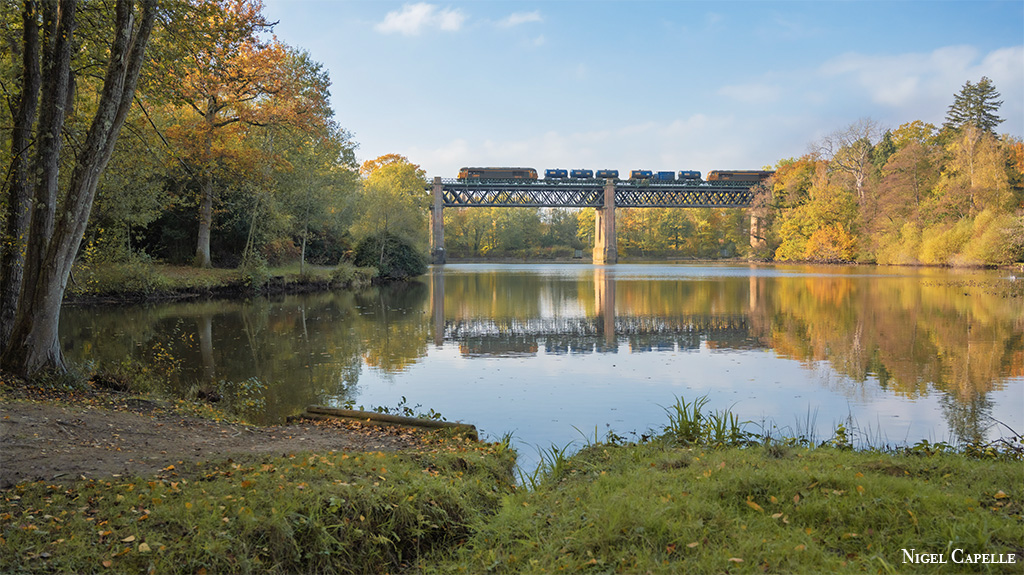
From there, the party headed east to Dormans Park and the aptly named Wilderness Lake, overlooked by the impressive Cookspond Viaduct. The weather was already showing signs of improvement, with the mist gradually lifting and patches of blue sky appearing. By the time they arrived, the photographers were being treated to something approaching perfect conditions.
Reaching the best vantage point proved a little more complicated than anticipated. After parking outside the private estate, the group followed a public footpath towards the lake, eventually finding a promising position with the viaduct high above the lake. However, their progress attracted the attention of a rather curious local angling club committee member, who appeared less than enthusiastic about their presence.
Rob and Nigel deployed their diplomatic skills, engaging in a little persuasive conversation which, fortunately, proved successful and permission was granted for a brief 15-minute window to capture the approaching RHTT.
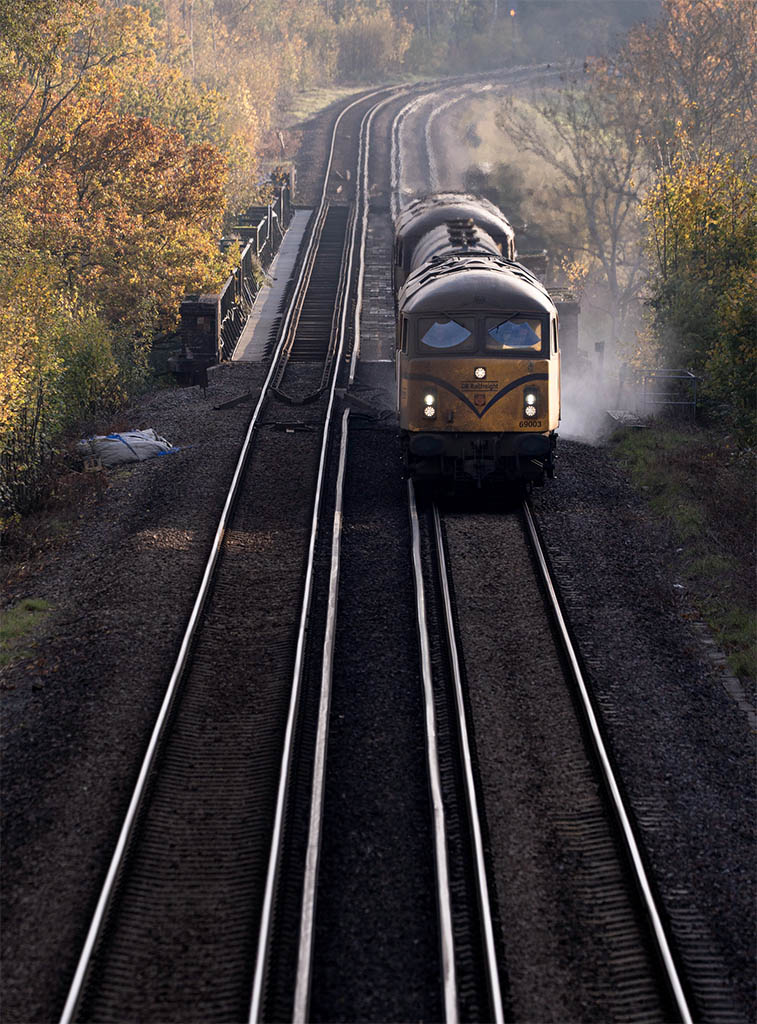
The wait was worthwhile. GBRf Class 69s Nos. 69010 and 69003 crossed Cookspond Viaduct with the RHTT heading towards East Grinstead, framed by the autumn foliage and bathed in glorious sunshine. It was one of those occasions when everything comes together and the resulting images were among the highlights of the trip.
With the first major objective secured, the team returned to public territory and repositioned themselves on the overbridge at Dormans Park to photograph the train on its return journey. Once again, the light was excellent.
The same RHTT circuit also included the Uckfield branch, so there was an opportunity for a second bite of the cherry. The photographers headed towards Eridge, where the Network Rail line runs alongside the Spa Valley Railway and found a small level crossing offering a rather tight but workable photographic angle. A few more images were secured as the Class 69s headed northwards.
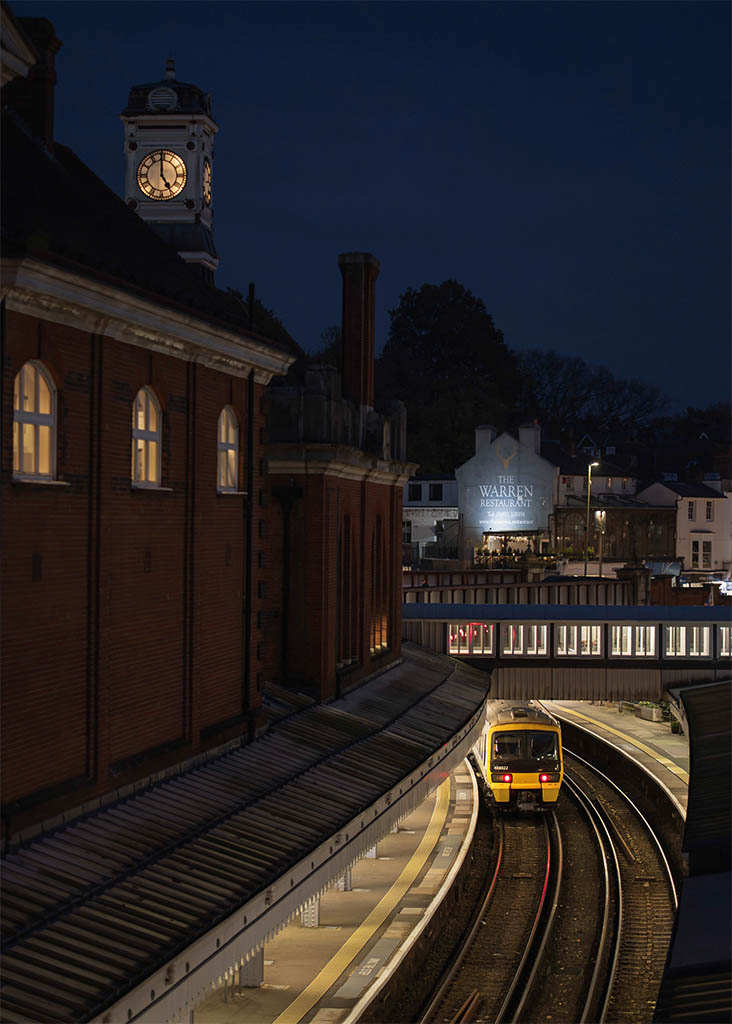
As daylight faded, the trio moved on to Tunbridge Wells station for some more conventional railway photography. The evening rush hour provided a steady procession of trains and passengers, although the station’s rather attractive architecture offered just as much interest.
Meanwhile, Gavin was making his own way south by train. His working day had taken an unexpected turn, having been involved in ITV filming relating to a collapsed mine shaft beneath tram tracks in Sheffield. Once filming finished around 2.30pm, he headed home before catching the 16.30 East Midlands Railway service from Sheffield to London St Pancras.
The journey south was not particularly inspiring, thanks to darkness and the less-than-comfortable seating aboard the new Aurora train. There were, however, a couple of railway observations, including Network Rail’s yellow HST passing through Derby and a glimpse of Class 99s on Leicester shed.
Gavin’s arrival in London coincided with the next logistical challenge. The plan had been to collect him from Tonbridge station at around 8pm before heading to Tonbridge West Yard for some night photography. Unfortunately, Tonbridge town centre was suffering from roadworks and considerable traffic congestion. Steve had already discovered the problem, having taken an astonishing hour and a half to travel from the yard to the hotel.
Nigel’s sat-nav had sensibly avoided the town centre for the journey from Tunbridge Wells, but the situation threatened to derail the evening’s plans. A quick message was sent to Gavin suggesting he alight at Hildenborough, one stop north and 5 minutes from the hotel, instead of Tonbridge – unfortunately his fast train didn’t stop there! A little improvisation involving a change at Sevenoaks and a short journey on a Class 465 eventually got him to the alternative station, just five minutes later than originally intended.
There was, however, one unexpected bonus. While waiting on the cold, dark platform at Sevenoaks, Gavin heard something approaching. It wasn’t his train, but a pair of Class 73s working an RHTT, running around 15 minutes late and reversing on his platform. A few hurried photographs were taken, securing his first Class 73 RHTT images before the rest of the team had seen any!
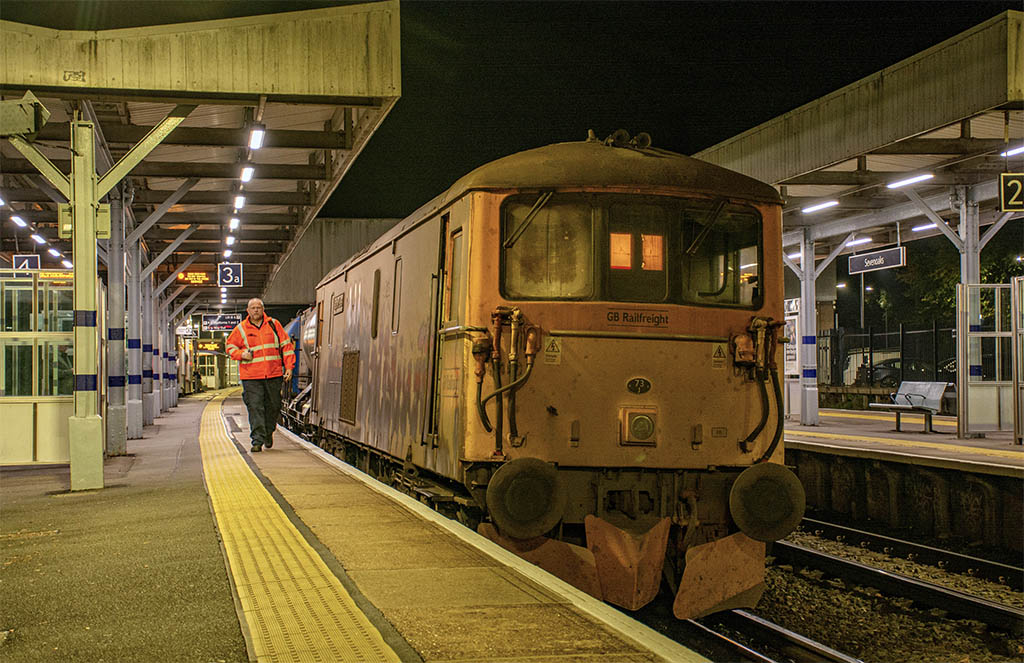
Nigel drove to Hildenborough station and Gavin was soon united with the others at the hotel in Tonbridge. The original plan for a night shoot at the yard was quietly abandoned in favour of something considerably more comfortable: a few pints in the hotel bar and a discussion about the following day’s activities.
Friday - Nuclear flasks and a change of plan
By 1Z10 standards, Friday’s planned departure was positively civilised with no ridiculously early alarm calls but the previous evening’s conversation had produced a significant alteration to the day’s itinerary.
Gavin had been checking RealTimeTrains and RHTT diagrams and had spotted something rather more interesting than the original plan. He had mentioned earlier in the week that it would be a shame not to visit the Dungeness branch while they were in the area. Nuclear flask trains are relatively infrequent visitors to the line and, having initially appeared unlikely to feature during their visit, the latest information suggested that a working was indeed on its way south.
A quick check on RTT revealed that a nuclear flask train from Crewe was heading towards Dungeness, with an expected arrival at the power station around 9.35am. That was enough to set the wheels in motion. The original plans were hastily torn up, Rob’s anticipated lie-in was sacrificed and the group prepared for an early departure towards Romney Marsh.
Two cars, driven by Nigel and Steve, headed south across the Kent countryside. The drive was pleasant enough, although the persistent mist and gloom were making their presence felt. The destination was Snargate, where the single-track Dungeness branch crosses a level crossing and the photographers arrived with sufficient time to establish themselves.
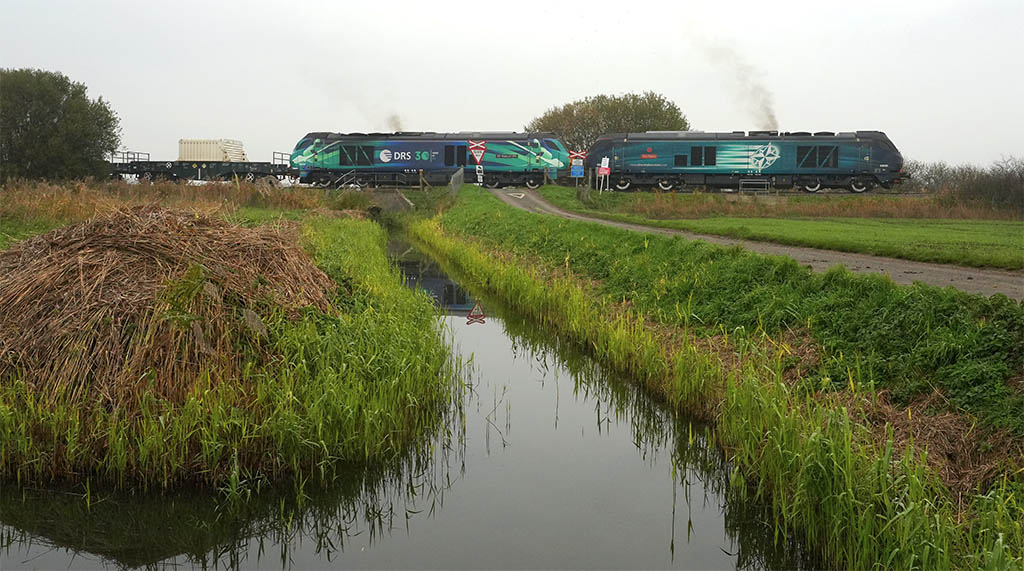
The train, double-headed by Class 68s, duly appeared and made its slow progress across the flat, open landscape. The photographers then split up to maximise the opportunities. Nigel, Rob and Mark headed for the Hanson ARC nature hide within the Dungeness Nature Reserve, where the train could be photographed from a distance across the large lake, with an abundance of birdlife providing an additional foreground interest.
Gavin and Steve took a different approach, leapfrogging the train towards Lydd and the power station to secure further views. Several locations were covered, including the barren expanse of Romney Marsh and the rather alien-looking pebble landscape around Dungeness.
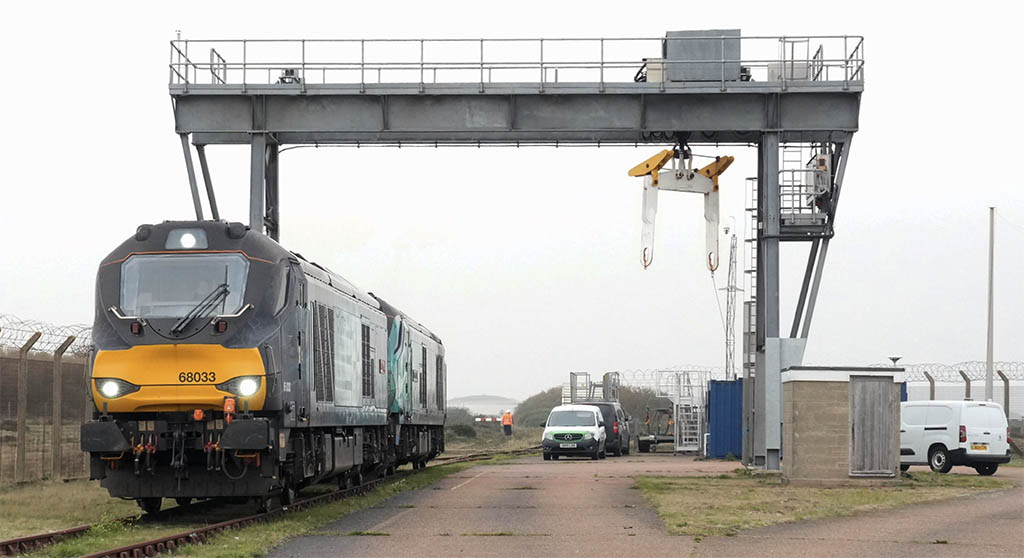
With the nuclear flasks safely recorded, attention returned to the original objective: the RHTTs operating across Kent.
The next destination was Canterbury, where several workings were expected to provide opportunities at both Canterbury West and Canterbury East. However, railway timetables and carefully constructed photographic plans do not always make comfortable companions. The first RHTT was running early and the group realised that they would struggle to reach Canterbury in time.
A quick change of plan mid journey saw them head instead to Faversham, where they arrived ahead of the train. The party dispersed to various vantage points to photograph the RHTT arriving, reversing direction and departing from the station. The location offered some interesting railway infrastructure, including an impressively long footbridge.
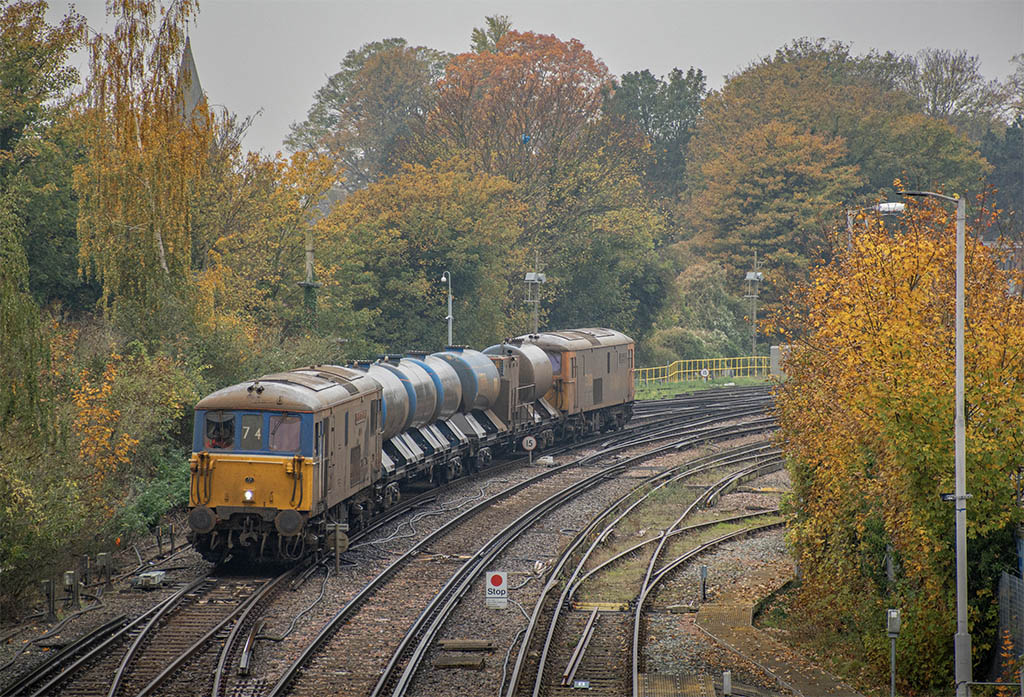
From Faversham, the photographers resumed their journey to Canterbury, where a welcome stop at a local café provided the opportunity for a coffee and something to eat before the next round of activity.
Canterbury West was the first target. The objective was to photograph the Class 73s passing beneath the station’s distinctive old overhead signal box, a listed structure and an increasingly familiar feature of the railway photography circuit.
The group split between the platforms. Mark and Gavin chose the eastbound platform for the better view, while Nigel, Rob and Steve positioned themselves on the westbound platform, which offered an acceptable view of the approaching RHTT.
Unfortunately, a Javelin unit heading east arrived at precisely the wrong moment. As the RHTT approached, the passenger train departed, completely obscuring the Class 73s for Mark and Gavin. The timing was almost impeccable in its ability to frustrate.
There were suggestions that the Javelin driver might have delayed departure by a few seconds, particularly as the approaching RHTT was clearly visible. However, railway operations tend to take priority over the photographic ambitions of two men with cameras and the train departed on schedule.
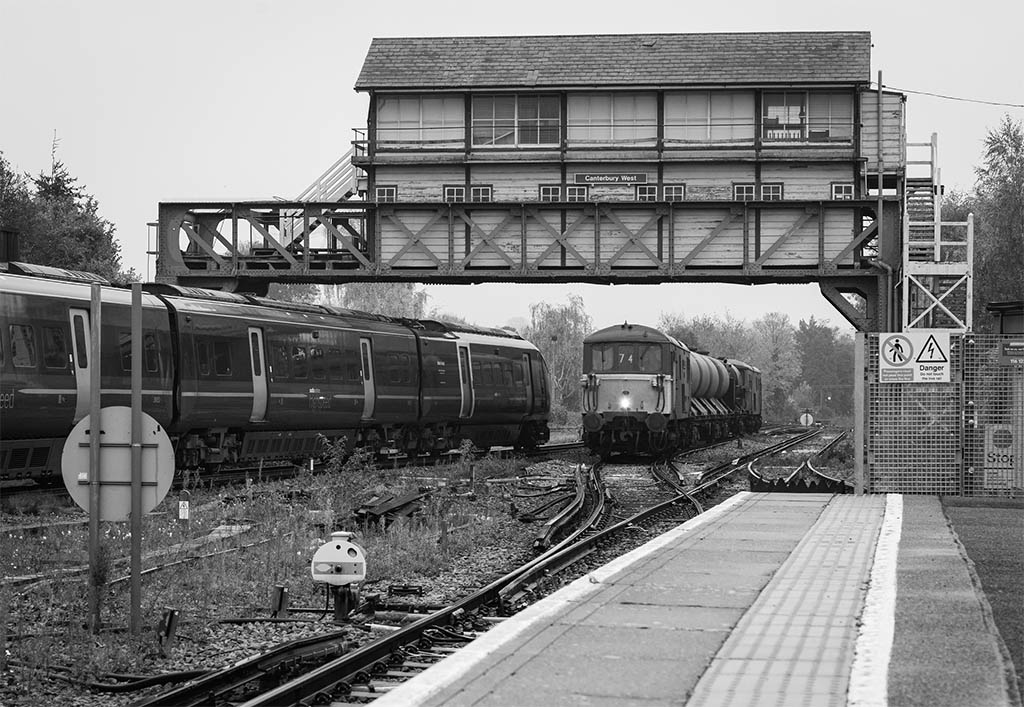
Nigel, Rob and Steve were rather more fortunate and secured their photographs, while Mark’s disappointment was expressed in language that might not have been entirely suitable for the café earlier. Gavin, meanwhile, could only sympathise with the loss of what had promised to be an excellent composition.
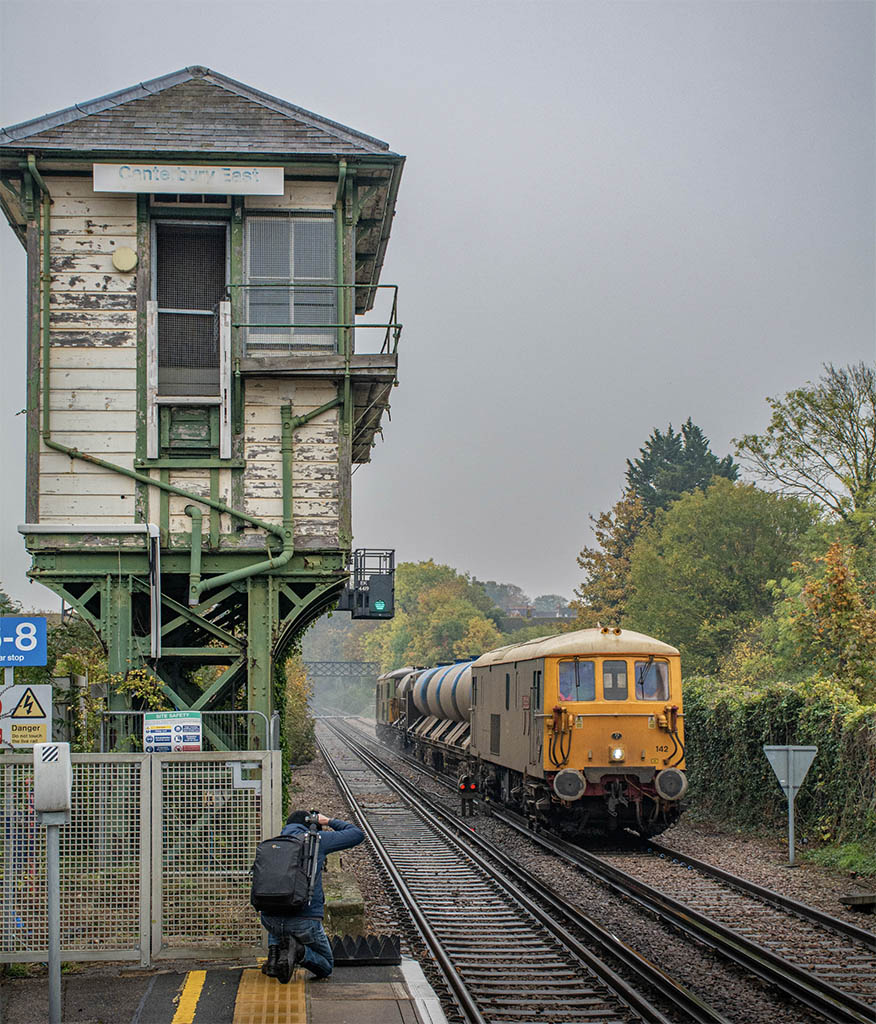
Canterbury East provided an opportunity to put matters right, with another Class 73-hauled RHTT working. This time there were no untimely Javelins to spoil the proceedings and the photographers secured their images beneath another historic signal box, although the structure itself was showing signs of needing a little attention.
The weather remained resolutely unhelpful, with mist, drizzle and general gloom dominating the afternoon. The team therefore headed towards Dover, where the RHTT would provide another opportunity on its circuit of Kent.
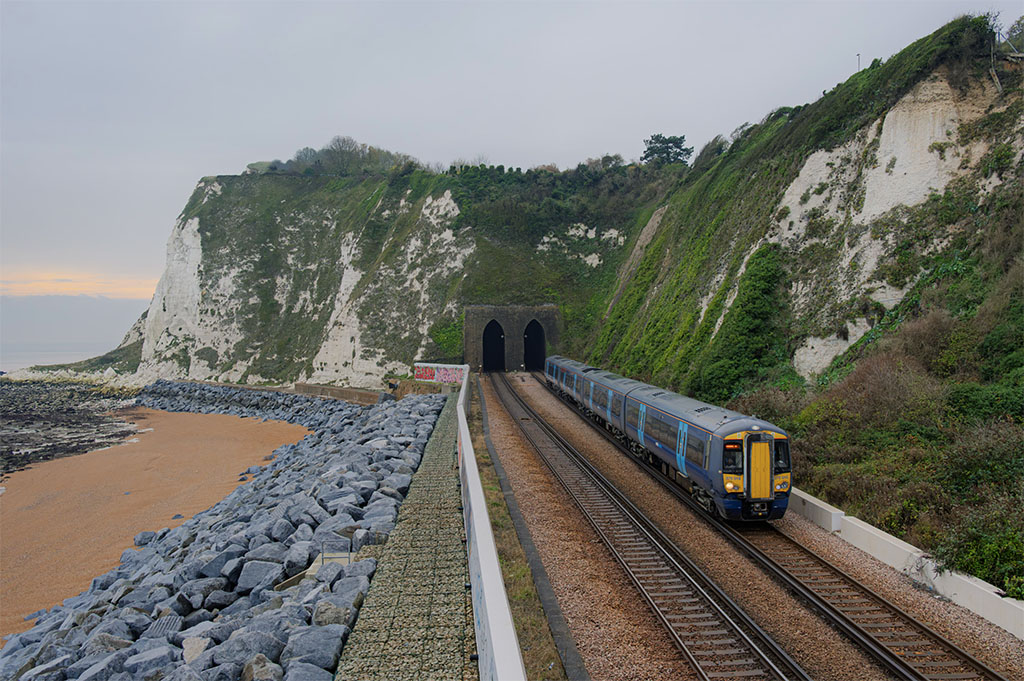
At Dover, the distinctive Shakespeare Cliff tunnels offered an unusual photographic setting. Their gothic-style arched entrances, close to the beach and the English Channel, provided a striking backdrop for the passing trains.
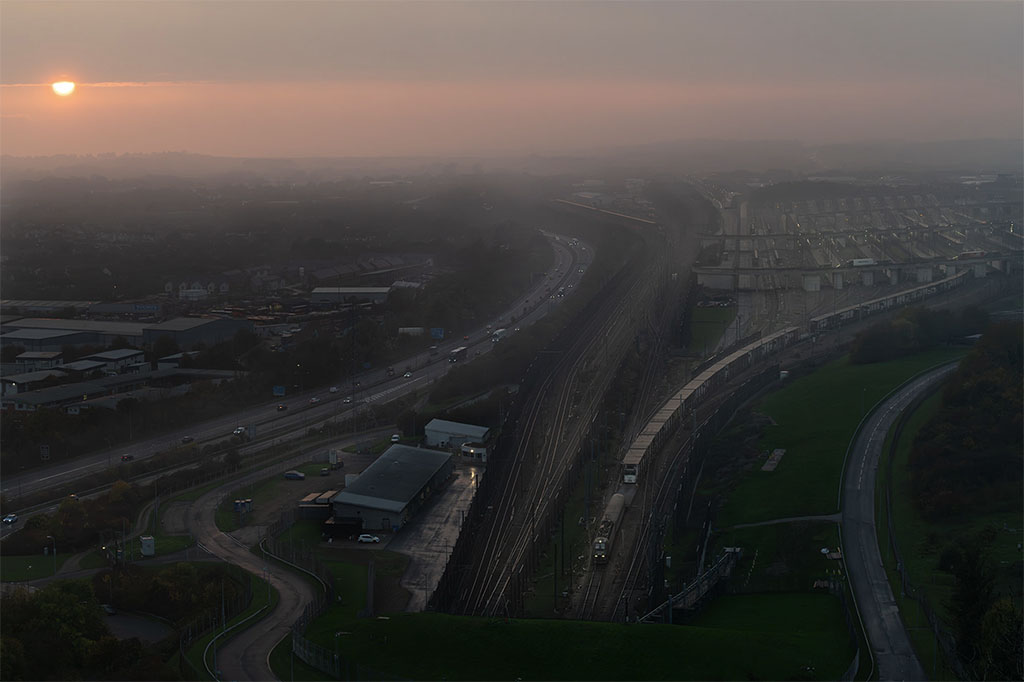
The next destination was Caesar’s Camp at Cheriton, high above the entrance to the Channel Tunnel. From this elevated position, the photographers could look down over the busy Le Shuttle terminal, watching Eurostar and shuttle trains emerge from and disappear into the tunnel at regular intervals.
The persistent mist created an almost surreal atmosphere, although it did little to encourage optimism about the photographic conditions. As the light faded, the group watched the sun slowly descend behind cloud, hoping for one final break and the sun to reappear.
Eventually, their patience was rewarded. The sun managed to find a narrow gap beneath the cloud, briefly illuminating the landscape in a wonderful warm glow. Cameras were quickly brought into action and several frames were captured before the light disappeared once more.
It was a fitting end to a day that had offered plenty of variety, even if the weather had done its best to make things difficult.
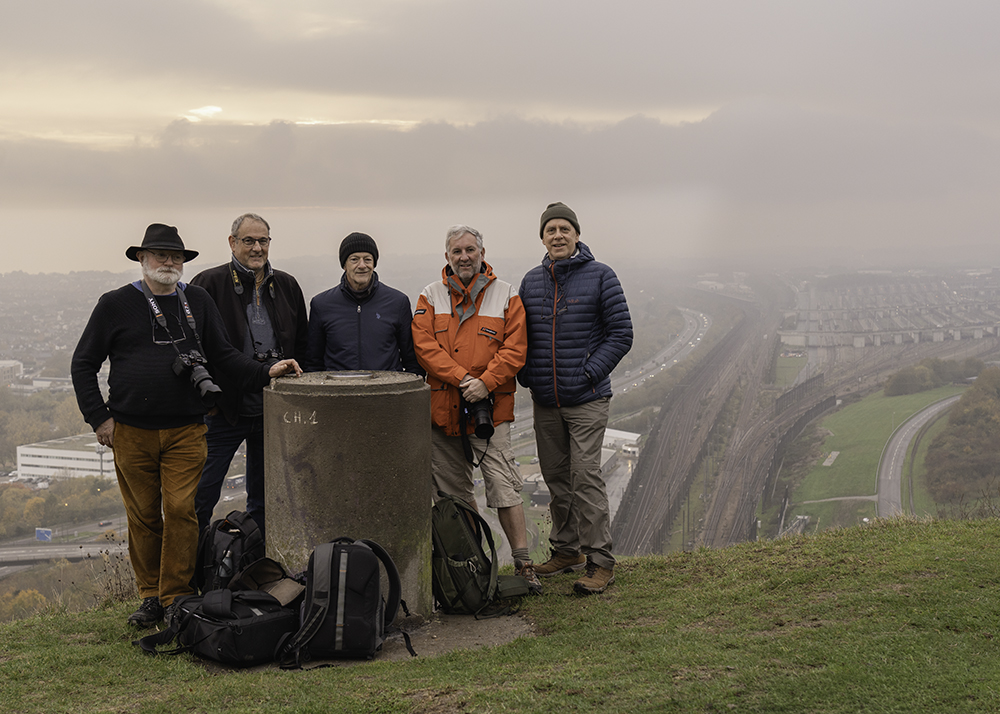
Mark then had to head home, so the others dropped him at Tonbridge station to catch his train. The remaining four returned to Tonbridge West Yard, where the previous evening’s aborted photographic plans could finally be revisited.
This time there were no traffic problems and Nigel and Rob joined Gavin and Steve on the footbridge overlooking the GBRf yard. What followed was something rather special.
The yard was well lit and numerous locomotives were stabled after their day’s work. Class 66s, 69s and 73s were all represented with several RHTT sets and freight wagons stored for the night.
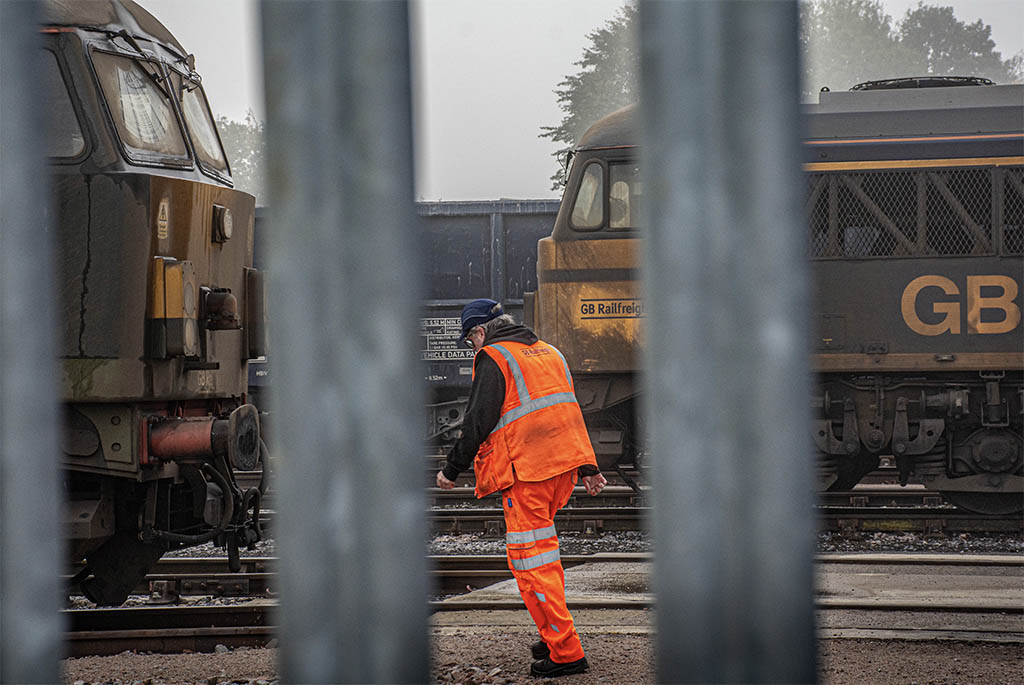
As the evening progressed, the mist began to thicken and eventually developed into a dense fog. While the conditions made photography increasingly challenging, it also created an atmospheric setting for some more creative images under the yard’s artificial lighting.
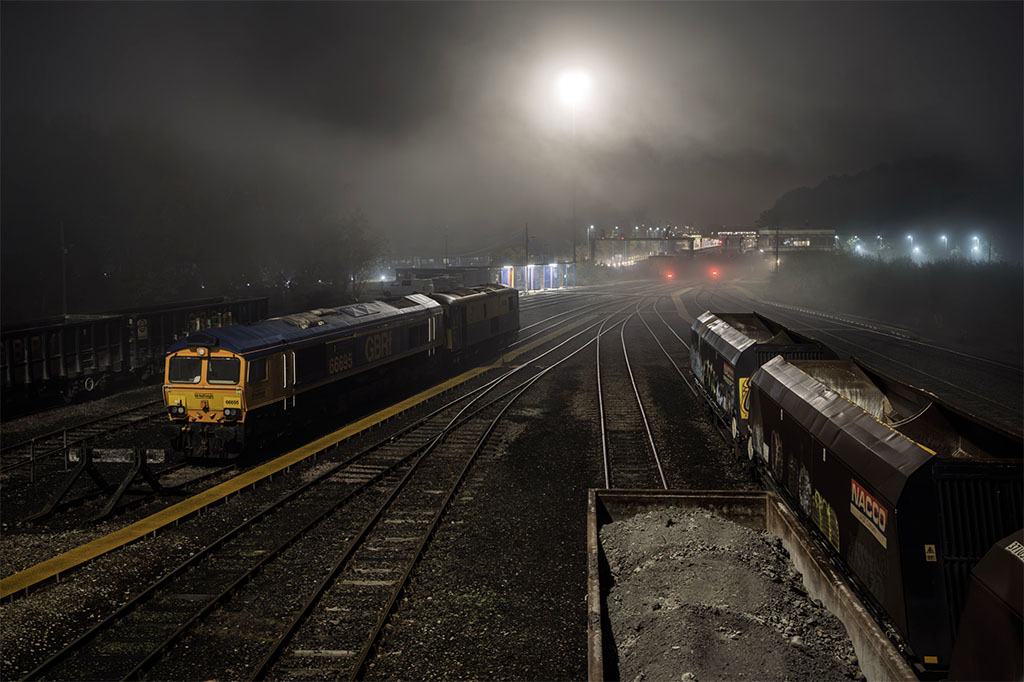
Gavin estimated that a couple of hours passed before the group finally called it a day. The cold, damp conditions were becoming increasingly difficult to ignore and there was only one sensible destination remaining: the hotel bar.
Dinner, a few pints and a comfortable bed rounded off another successful day.
Steve particularly appreciated the variety of locations covered during the day, from Canterbury’s historic railway infrastructure and Faversham’s long footbridges to the soaring cliffs around Dover.
Saturday - Clan Line steals the show
Saturday morning brought more of the same weather. The fog remained firmly established and visibility was poor as the group prepared for the final day.
Gavin had an early train to catch from Tonbridge, departing at around 9.35am, as he needed to return to Sheffield to watch his son playing football for Sheffield FC. Before that, however, there was time for a little more railway photography.
No 1Z10 outing would be complete without a visit to McDonald’s and this trip was no exception. Breakfast and coffee were duly consumed before the photographers returned to Tonbridge West Yard for another session in the fog.
The yard was still an impressive sight, with a considerable number of locomotives in residence and plenty of opportunities for different compositions. The atmospheric conditions lent themselves to some interesting images, although the fog was making visibility something of a challenge.
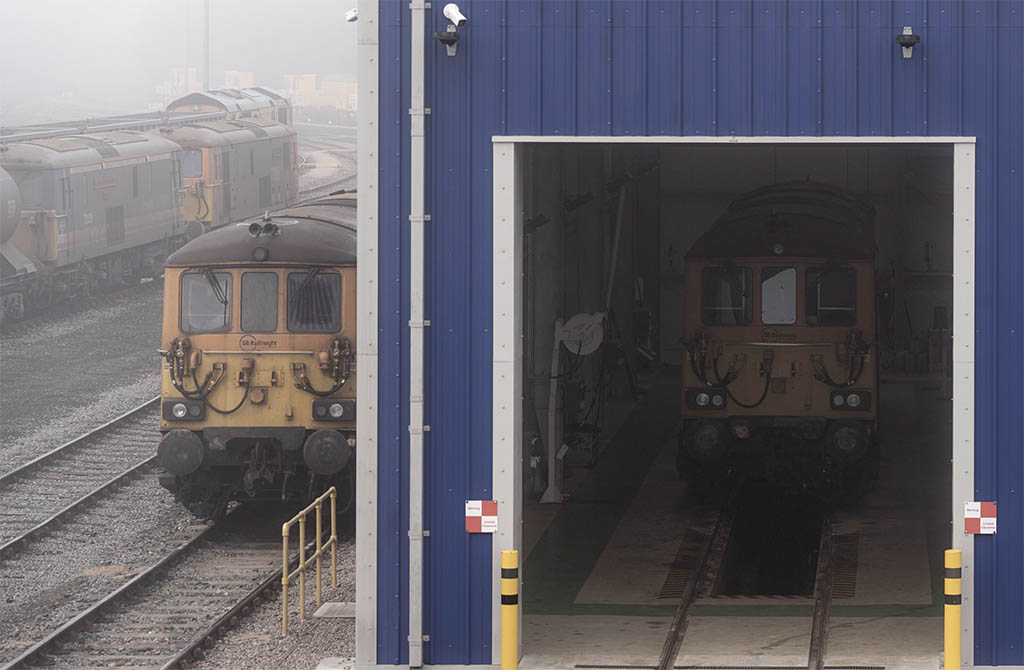
After an hour or so, the group headed to Tonbridge station to see Gavin off. For Steve, who had spent years modelling the Southern Region and accumulated more than 100 books on the subject, this was particularly rewarding. Despite his extensive knowledge of the area, he had never really explored this section of the Southern Region photographically. He felt as though he had somehow shrunk down to 1:76 scale and stepped straight into the middle of his own model railway.
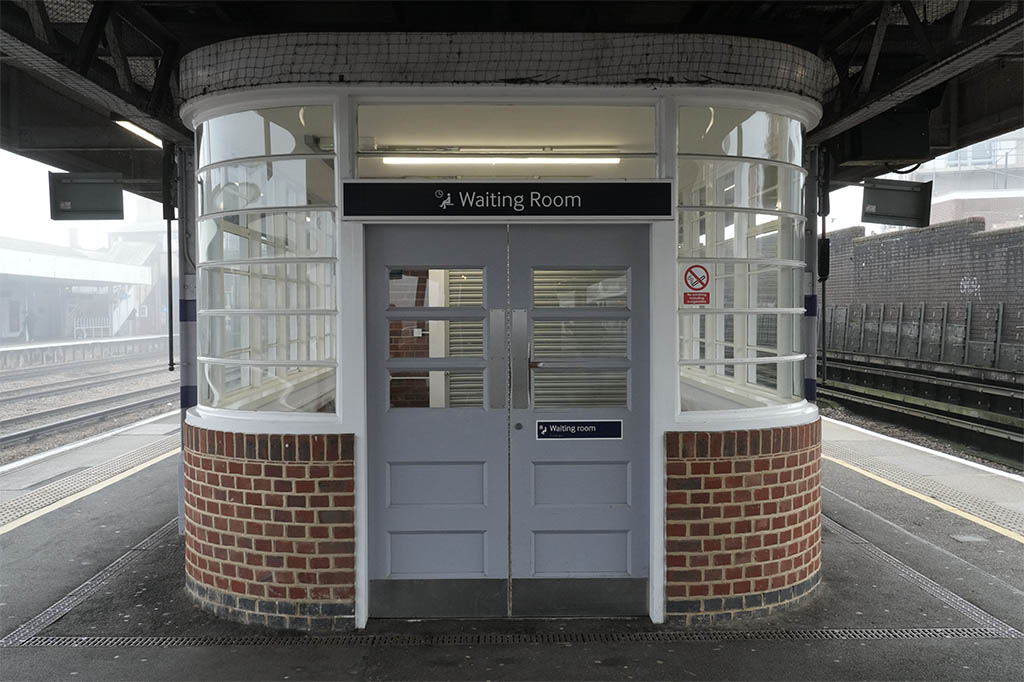
A few more photographs were taken on the platforms before the remaining three, Nigel, Rob and Steve considered their next move.
Paddock Wood was favourite. Historically a three-way junction, it once had the Goudhurst branch diverging from what is now the station car park. Steve was particularly interested in its railway history, although the rather splendid South Eastern Railway station clock was arguably the highlight of the visit. From a photographic perspective, however, the station was uninspiring with little activity and the fog still hanging around.
The team therefore decided to move on and Steve suggested a visit to Sole Street in the North Downs, where a steam-hauled Pullman excursion was due to pass around lunchtime.
This turned out to be an inspired decision.
The railway climbs towards Sole Street at a gradient of 1 in 132, over a five-mile stretch of the Chatham main line. The bank has a formidable reputation among steam enthusiasts and Steve had long read accounts of the spectacular displays of enginemanship required to tackle it. Having modelled the Southern Region for so many years, he was particularly keen to witness it for himself.
By the time the group arrived, the weather had finally begun to improve. The sun had managed to punch through the low cloud and mist, revealing blue sky and providing the first really encouraging light since Thursday afternoon.
The photographers positioned themselves at the station with their long lenses ready. The expectation was that the cold, damp atmosphere, combined with the steep gradient, would produce an impressive display of steam and exhaust as the locomotive attacked the bank.
They were not disappointed.
Bulleid Pacific No. 35028 Clan Line, hauling the Pullman excursion from London Victoria to Dover, approached and stormed up the incline towards the station. The combination of the locomotive working hard, the atmospheric conditions and the welcome sunshine produced a truly spectacular sight.
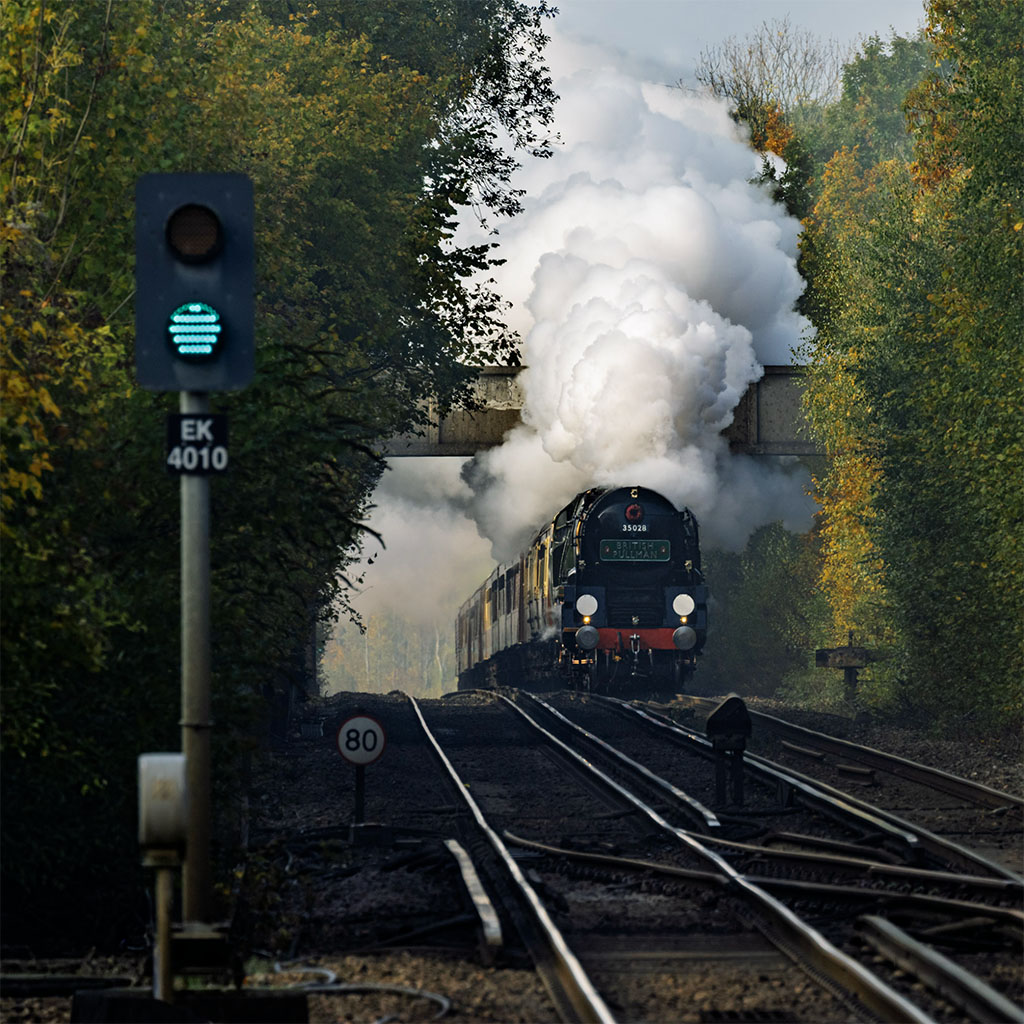
Cameras were firing rapidly as the locomotive made its assault on the bank. For Steve, it was the realisation of something he had read about for years, while for the others it was one of those memorable railway photography moments that makes the early starts, long drives and occasional bouts of bad weather worthwhile.
The resulting images were quickly shared to the 1Z10 Flickr group with Nigel and Steve among the first to post their efforts. Both were clearly delighted with the results and it was difficult to argue with their enthusiasm. From the hundreds of images accumulated over the three days, Clan Line at Sole Street was destined to be one of the outstanding highlights.
With the steam excursion successfully captured, it was time to think about heading home. Steve said his farewells to Nigel and Rob, who began their journey westwards along the A2 and M25 with one final photographic opportunity planned at Leatherhead.
They arrived with around ten minutes to spare before another Class 73-hauled RHTT was due and positioned themselves at opposite ends of the platform, hoping to secure a final image before calling time on the trip.
Unfortunately, the photographic gods had one last little joke in store. A Southern Class 377 arrived at precisely the wrong moment, completely obscuring Rob’s view of the approaching RHTT. Nigel, positioned at the other end of the platform, was fortunate enough to secure his shots before being similarly obstructed.
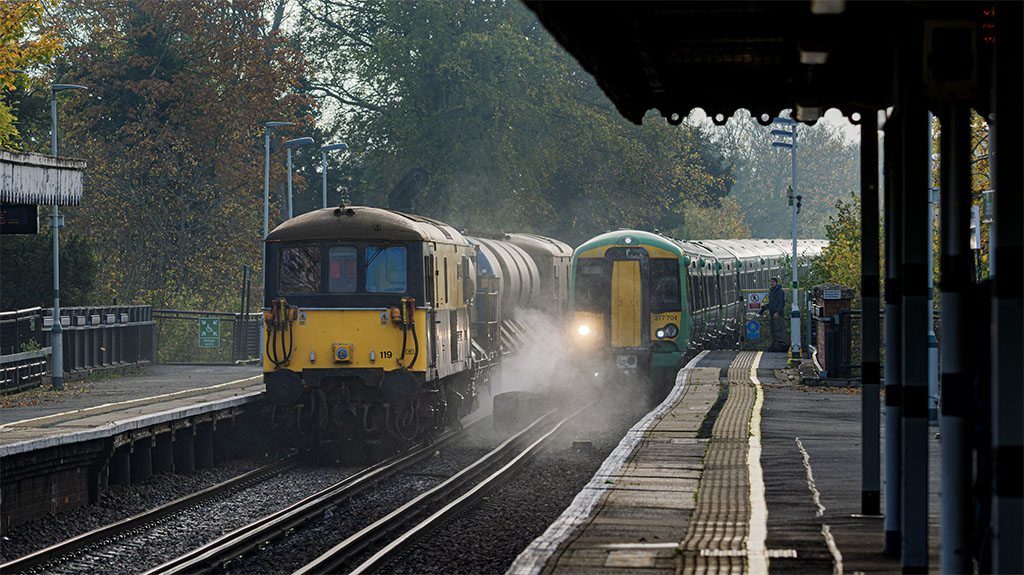
Rob was far from impressed. Following Mark’s experience at Canterbury West the previous day, the trip had now produced two separate examples of photographers being ‘bowled’ by passenger trains. At least there was some consistency in the proceedings!
With their Southern Region adventures finally over, Nigel and Rob turned their attention northwards. There was still sufficient time before sunset for a short diversion to King’s Sutton, just off the M40, where they hoped to photograph a Chiltern Railways Class 68 working.
Sadly, the anticipated locomotive-hauled service failed to materialise during their visit and only multiple units appeared. It was nevertheless a welcome break on the long drive home, even if the railway had once again declined to cooperate.
The journey back to Rob’s home was relatively straightforward, Saturday evening traffic being considerably kinder than the chaos encountered in Tonbridge on Thursday. Nigel eventually arrived home at around 8pm, with a full memory card and three days’ worth of photographs awaiting the attention of Lightroom.
Three days well spent
The Kent and East Sussex expedition had delivered a little of everything. There had been spectacular autumn colour at Cookspond Viaduct, rare nuclear flask traffic along the Dungeness branch, numerous RHTT workings, historic signal boxes, impressive railway architecture, the atmospheric surroundings of the Channel Tunnel and finally, a magnificent steam performance from Clan Line at Sole Street.
The weather had been something of a mixed blessing. Two days of mist, gloom and fog had tested everyone’s patience, although the conditions had occasionally provided opportunities for more atmospheric and creative photography. The brief appearances of sunshine, particularly at Cookspond Viaduct and Sole Street, were all the more welcome for their scarcity.
For Steve, the trip had been an opportunity to explore a part of the Southern Region that had long featured in his railway reading and modelling interests. For Gavin, the unexpected discovery of the nuclear flask working had transformed the Friday itinerary and provided one of the trip’s most unusual photographic opportunities. Mark’s local knowledge and contacts had helped the group make the most of the available workings, even if Canterbury West had tested his patience rather more than anticipated. Rob had enjoyed the variety of locations and the opportunity to photograph some unusual workings, although his encounters with badly timed passenger trains would perhaps be remembered less fondly. And for Nigel, it had been another thoroughly enjoyable 1Z10 adventure, combining the usual mixture of planning, improvisation, good company and plenty of railway photography.
There had also been the usual collection of incidental memories: the negotiations with the angling club, the unexpected Class 73 encounter at Sevenoaks, the Tonbridge traffic chaos, the late-evening fog at the yard, the obligatory McDonald’s breakfast and, of course, the inevitable discussions over a few pints.
Most importantly, five photographers had enjoyed three days exploring some fascinating railway locations, adding plenty of new images to their collections and creating a few more stories to recount at future 1Z10 gatherings.
The autumn leaves may have been the official reason for the expedition, but the memories of Clan Line storming up Sole Street bank, the nuclear flasks crossing Romney Marsh and the locomotives shrouded in mist and fog at Tonbridge will probably linger rather longer.
Another successful 1Z10 outing, then. And judging by the contents of those memory cards, there will be plenty to keep everyone busy until the next adventure!
Steve Knight
Rob Walton
Gavin Bland
Nigel Capelle